Influencers and Content Creators are Making WHAT?!
See what creators actually earn: Real salary data from 9,500 influencers reveals income trends across all follower tiers in 2026.
By Nicole Young, Chief Strategy Officer @creatordbapp
“I want to be an influencer when I grow up, not an astronaut! I want to quit my 9-to-5! Influencers make millions!” This is definitely the assumption that many have about the creator economy, given the rapid rise of social influencers and creators over the last few years.
Despite the continued rapid growth, there is nearly zero research out there as to what these creators are actually making. Not the Kim-Whats-Her-Name Mega Influencers, but the average person out there just trying to hone in on something they love. The gamer streaming next door, the DIY mom a few blocks over, the garage band (is that what they still call them), the travel blogger, or the billion and one pug account owners.
What are those creators making? Recently, the mothership of bio software companies, Linktree, surveyed 9500 influencers to see what’s happening in the creator space when it comes to the dollar-dollar bills. Linktree estimates that 200 million people could be classified as creators, which the company defines as anyone who uses their influence and creativity to monetize their audience, regardless of which platforms they use. But the study found that 39% of creators — regardless of their income level — reported they consistently must take measures to reduce stress; in fact, 13% of full-time creators say they’re extremely stressed. Source: Tech Crunch
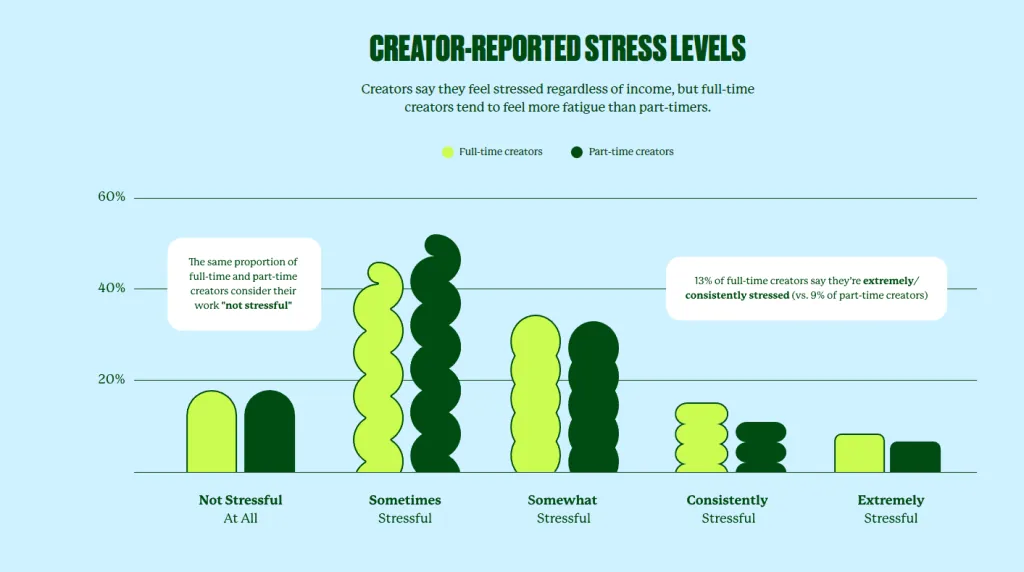
Wow! Well, of course, these creators are stressed out. They are literally running a small business out of their homes in most cases. Constantly being “on” for followers, constantly creating, constantly editing, and repeat, Heck, just being “on” alone makes me sleepy, let alone all the other stuff that it takes to make it in the creator space.
The most startling finding in the Linktree report was that only 12% of full-time creators make more than $50,000 per year, while 46% of full-time creators make less than $1,000 annually. Clearly, those making a grand are definitely creating as a side hustle, but let’s be honest, at 50k, you’re still hustling somewhere else to pay the bills. Umm, and eat! Linktree estimates that 66% of creators do consider their channels as a side, but have to supplement their real passion in other places.
The data goes on to show two-thirds of creators make less than 10% of their total income from brand partnerships, which indicates that brand deals are neither reliable nor consistent sources of income for most people in the space. And, eeek, worse than that, 12% of creators claim to make less than $100 per brand collaboration.
Oh, hell no!

Here at CreatorDB, we are running collabs all day, so we thought we’d toss out five quick and easy tips to ensure you’re getting paid what you are worth for brands and your channel.
5 Tips to Get Paid What You’re Worth
1. Be consistent
Not only with your views, but your publishing schedule too. Our clients will overlook an off-post here or there, but if your uploading is all over the place, it’s going to be a hard pass.
2. Say cheese
Most brands want to see your beautiful face. They want to see a personality representing their goods and services or products. So don’t be shy; get out there, smile and be you.
3. Don’t force a sponsorship
You know your channel best. You know what works for your audience and what doesn’t. It’s super easy to want to get paid, but in the long run, if you’re working with a bunch of rando brands just for the paycheck, your engagement rates are going to be low. Brands will inevitably not want to work with you, and chances are your audience is going to pass too.
4. Be straightforward
It’s 2022, let’s be honest, no one is under the illusion that you aren’t being paid for most brand plugs. So, come out with it and have some fun with it. Let people know that this sponsorship covers the cost of ramen noodles, so you can eat for the next week. Brands love big personalities, and so do viewers.
5. No asshole policy
Follow this golden rule. It’s that simple. No one likes a jerk. 99% of brands won’t touch the drama, and your viewers, although you may get a hit here or there in the long run will get very tired of it too.
Work with CreatorDB
Put this into
practice.
Talk to our Asia agency team about applying these ideas to a real creator campaign — or open the CreatorDB app and start building your shortlist now.
Frequently Asked Questions.
What percentage of full-time creators actually earn over $50,000 annually?
Only 12% of full-time creators make more than $50,000 per year, according to Linktree's survey of 9,500 influencers. Meanwhile, 46% of full-time creators earn less than $1,000 annually. These figures show that creator income is heavily skewed toward the bottom, with most relying on supplementary income streams or treating content creation as a side hustle rather than a primary income source.
How much income do most creators actually get from brand sponsorships?
Two-thirds of creators generate less than 10% of their total income from brand partnerships, making sponsorships unreliable primary income sources. Worse, 12% of creators earn less than $100 per brand collaboration. This inconsistency means creators cannot rely solely on brand deals to sustain themselves, forcing most to maintain additional employment or income streams alongside their channels.
Why do content creators experience such high stress levels?
39% of creators report consistently taking measures to reduce stress, with 13% of full-time creators saying they're extremely stressed. The pressure stems from the constant demands of the role—maintaining a publishing schedule, staying 'on' for followers, creating and editing content continuously, and managing a small business from home. This relentless cycle of production and visibility creates significant mental and emotional strain.
What's the best way to negotiate higher rates from brand sponsors?
Choose brand partners strategically rather than accepting every offer for a quick paycheck. Maintain consistent publishing schedules and engagement rates, show your personality on camera, and avoid forcing misaligned sponsorships that alienate your audience. Brands value creators with authentic audiences and strong engagement metrics; forcing irrelevant deals tanks your credibility and rates long-term, making selectivity your strongest negotiating position.
How should creators disclose paid sponsorships to their audience?
Be straightforward and transparent about sponsorships rather than hiding them. Audiences expect creators to be paid; authenticity and humor around disclosure—such as joking that a sponsorship pays for your ramen—actually resonate with viewers and brands alike. Clear, personality-driven disclosure builds trust, maintains engagement rates, and makes you more attractive to future brand partners compared to creators who obscure commercial relationships.