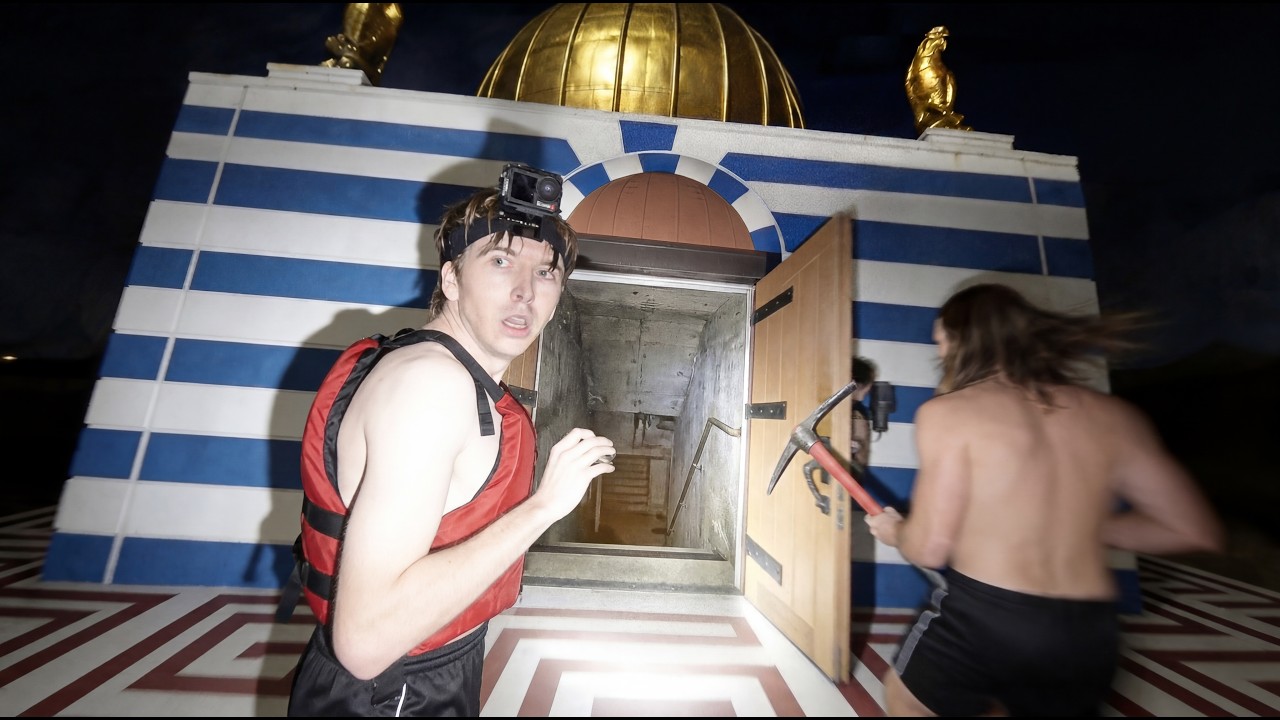
33 minutes, 24.2 million views: “Sneaking into Epstein’s Temple,” the video that built a channel
To make the video above, a creator called SideQuest Drew got onto Jeffrey Epstein’s private island, an earlier attempt happened during a hurricane, and filmed inside the temple every documentary had only shown from a drone. It runs 33 minutes. It has 24.2 million views. When he made it, his channel had 86,000 subscribers. Today it has 616,000.
That is not how content works in 2026. Content is supposed to be daily uploads, trend-chasing, and armies of paid clippers slicing streams into confetti. But the strangest counter-trend in the creator economy is that the format growing fastest per unit of effort is the one that takes the most effort of all: going there in person. Sneaking in. Embedding for weeks. Knocking on the door with a camera rolling.
So this article asks one question: in the year content became infinite, why is the scarcest, slowest, most expensive format on YouTube the one that keeps winning? The answer runs through four sets of numbers: who these creators are, what the work costs them, proof their virality is a system rather than luck, and how their audiences pay them back. It has a lineage and it deserves a name: Gonzo 2.0.
From Nellie Bly to a GoPro
The form is older than the word. In 1887, reporter Nellie Bly feigned insanity to get committed to New York’s asylum on Blackwell’s Island and wrote Ten Days in a Mad-House from the inside; the exposé triggered real reform. In 1970, Hunter S. Thompson covered the Kentucky Derby by becoming part of the chaos he was describing, and “gonzo journalism” got its name: the reporter in the story, not above it. Louis Theroux carried the embed format to television.
The YouTube generation didn’t study this canon so much as reinvent it with worse equipment and better instincts. Andrew Callaghan started All Gas No Brakes in 2019 out of an RV, interviewing America at its weirdest events; after splitting with the media company that controlled the channel, he launched Channel 5 in 2021 and put a feature documentary on HBO by the end of 2022. Reckless Ben infiltrated Scientology, a commune, McKamey Manor, and a Lego franchise’s corporate dispute, then quadrupled his channel in a summer. Peter Santenello embeds inside communities outsiders never see: Hasidic Brooklyn, the Ozarks, off-grid New Mexico. Coffeezilla runs the desk-bound wing, months-long financial investigations, and this summer his biggest video was, fittingly, about the same missing $200,000 Lego collection Reckless Ben went to jail over. The genre has started covering itself.
That is the who and the where-from. Now the numbers: how big this actually is.
The Roster, Measured
| Channel | Subs | Avg Views · Recent | Median Views | Uploads · 90d | Growth · 90d |
|---|---|---|---|---|---|
| Tyler Oliveira | 9.6M | 4.7M | 3.9M | 22 | +1.7% |
| Coffeezilla | 4.7M | 4.8M | 4.4M | 1 | +3.5% |
| bald and bankrupt | 4.5M | 2.8M | 2.4M | 2 | +0.4% |
| Peter Santenello | 4.3M | 1.3M | 1.2M | 10 | +1.7% |
| Channel 5 (Andrew Callaghan) | 3.7M | 1.7M | 1.3M | 63* | +4.0% |
| Reckless Ben | 1.9M | 2.9M | 2.5M | 8 | +271% |
| SideQuest Drew | 616K | 2.1M** | — | 2 | +21% |
CreatorDB tracking, August 27, 2026 · *Channel 5’s count includes clips from its 5CAST interview show · **documentaries only; his channel mixes in Shorts
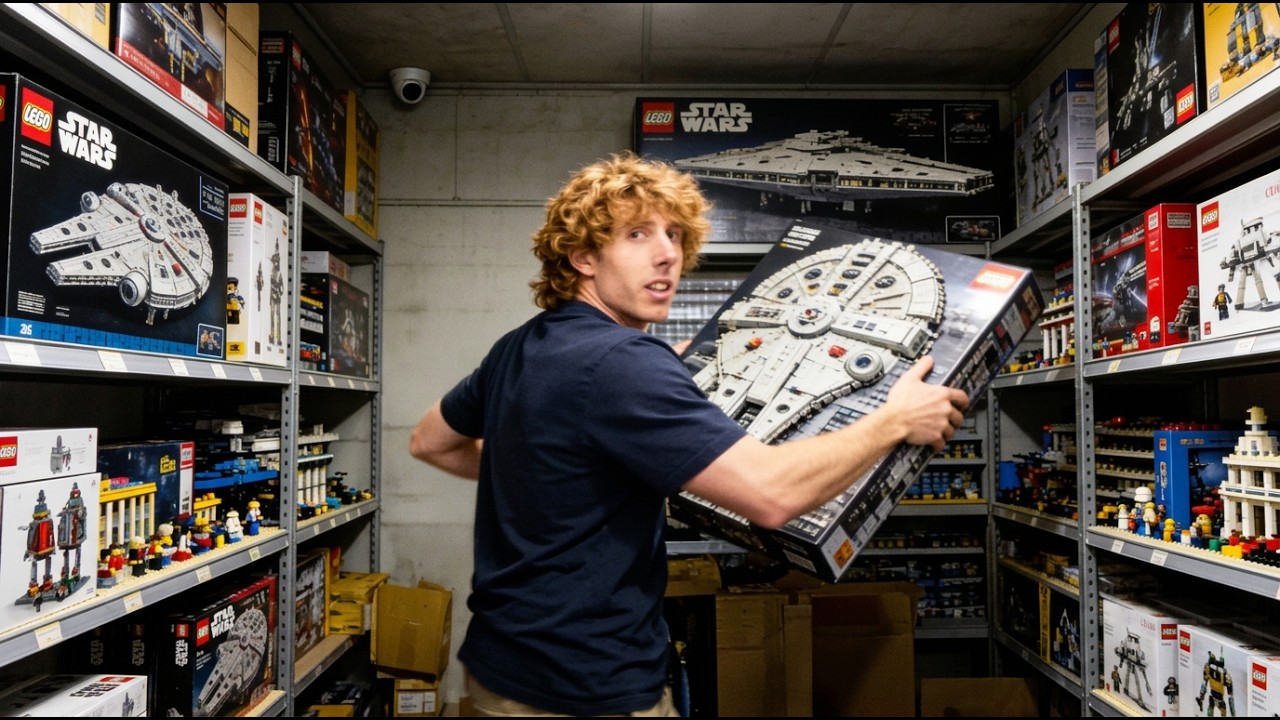 I tracked down the thief who stole $200,000 of LEGO (Reckless Ben)7.1M views · 85 min
 Nick Fuentes Interview (Channel 5)5.1M views · 106 min
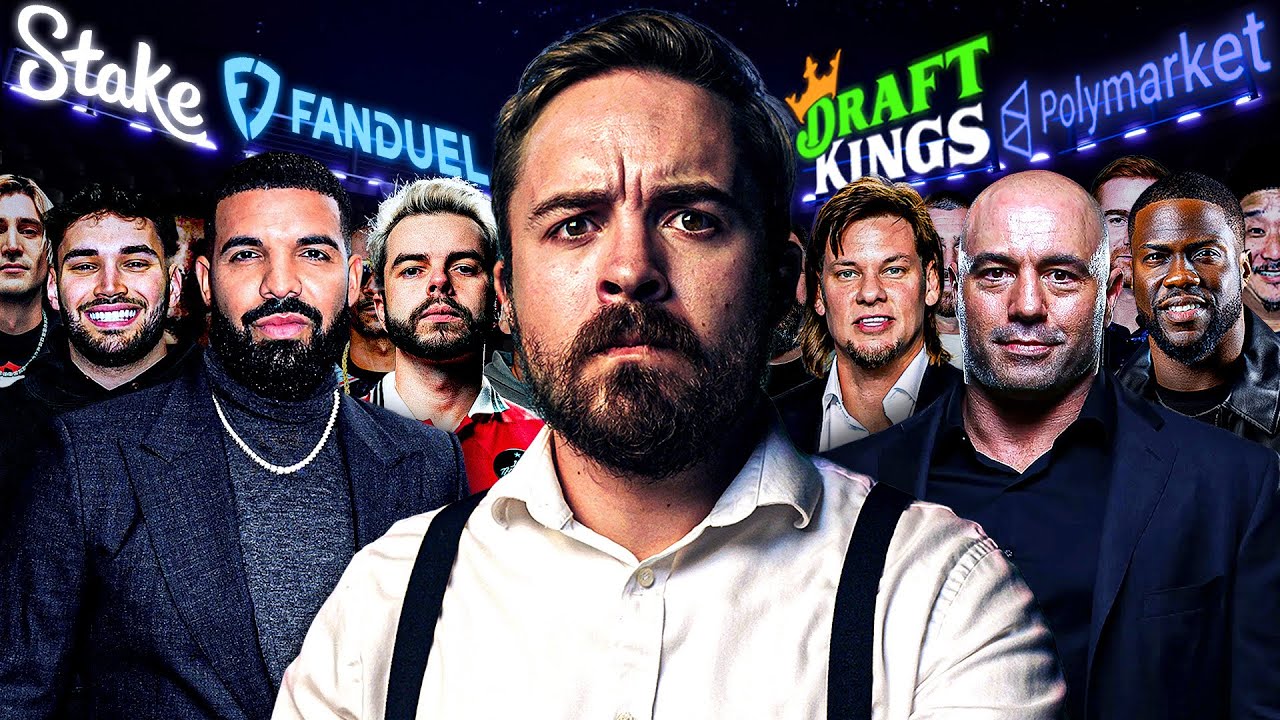 Exposing the Gambling Epidemic (Coffeezilla)8.8M views
 Solo Deep in the Ozarks (Peter Santenello)2.4M views · 76 min
Four wings of the genre: infiltration, the sit-down, the investigation, the embed · click to watch
Maximum Effort, Minimum Volume
Every piece of creator-economy advice says the same thing: upload constantly, feed the algorithm, volume wins. This entire genre ignores that, because the work physically cannot be rushed. Reckless Ben’s Provo Canyon investigation took months undercover, with a collaborator employed inside the facility for four weeks. Callaghan’s pieces come from weeks on the road. Santenello’s embeds run 54 to 76 minutes because he actually stays. Coffeezilla published exactly one video in the last 90 days.
And the numbers reward it. Here is average views per upload against how rarely each channel publishes:
Put the two economies side by side and the contrast is absurd. These seven channels, 29 million subscribers between them, publish roughly 36 videos a month combined. In our clip economy census, a single clip channel posted 53 videos in 30 days, and the clip swarm around six streamers posted nearly 10,000. One economy manufactures volume and buys distribution. The other spends months on a single video and lets the algorithm come to it. Both work. Only one of them produces something nobody else can copy.
Virality as a System, Not a Fluke
“They keep going viral” sounds like an impression. It is actually measurable, and the statistic that proves it is the gap between a channel’s median video and its average video. A channel carried by one lucky hit has a median far below its mean. Across this roster, the median runs at 80 to 90 percent of the mean: Coffeezilla’s median recent video does 4.4M against a 4.8M average, Reckless Ben’s 2.5M against 2.9M, Tyler Oliveira’s 3.9M against 4.7M. Nearly every upload hits. The virality is structural.
It also travels across topics, which almost nothing on YouTube does. Reckless Ben went viral about Scientology, then Legos, then a troubled-teen facility. Coffeezilla went viral about crypto fraud, a podcast scam, MrBeast, gambling, and a Lego heist. Callaghan’s last two months alone span a 106-minute Nick Fuentes interview and field reporting from Palestine. The subject changes; the numbers do not. What their audiences subscribe to is not a topic, it is a method: someone actually went and looked.
And the genre is minting new stars faster than any comparable format we track. This is SideQuest Drew’s last twelve months:
SideQuest Drew, subscribers Sep 2025 to Aug 2026 · CreatorDB tracking
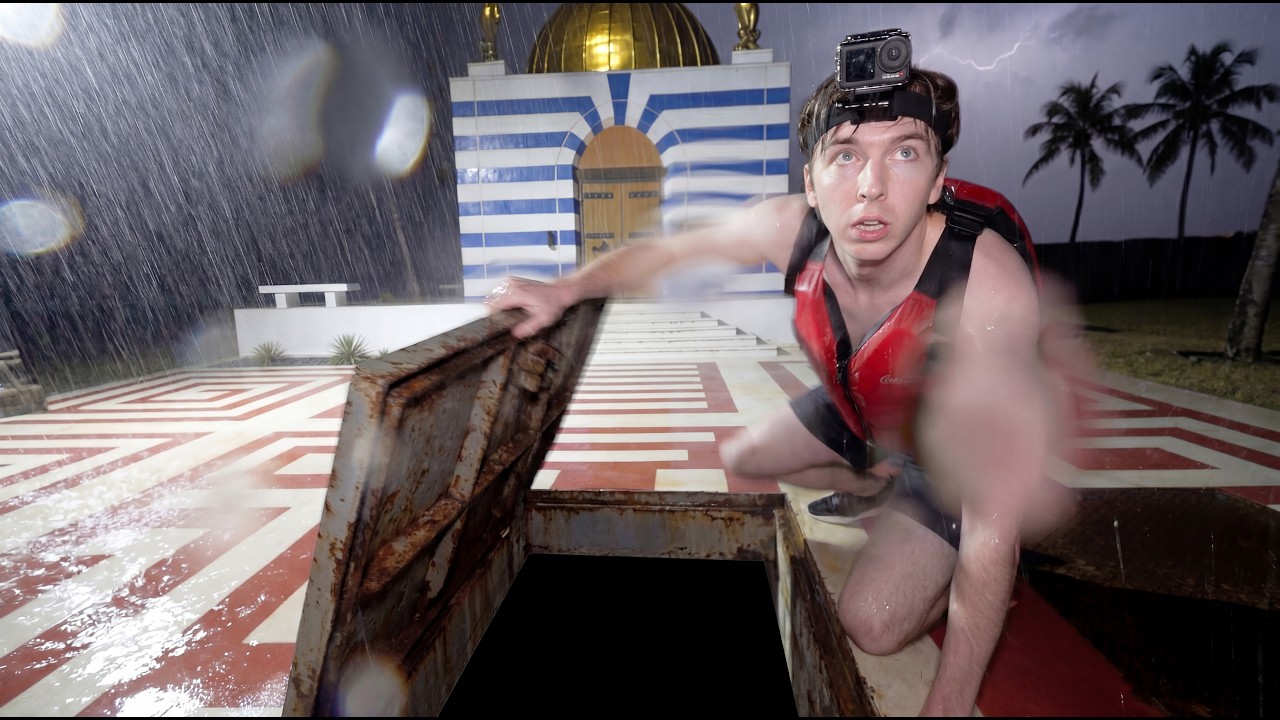 I Investigated Epstein's Underground Tunnels (SideQuest Drew)5.6M views
 Solo On Ukraine's Eastern Front (bald and bankrupt)5.1M views · 63 min
 Apartheid in Palestine (Channel 5)2.6M views · 45 min
 I Found The $200,000 Missing Lego (Coffeezilla)8.2M views · the genre covers itself
One method, any subject: tunnels, front lines, occupied territory, a Lego heist · click to watch
The Trust Economy
Here is the number that says the most about what these audiences are actually buying: three of the seven channels take no sponsors at all. CreatorDB’s sponsorship tracking shows Reckless Ben, Coffeezilla, and SideQuest Drew running entirely sponsor-free, funded by ad revenue, memberships, and fans, while Channel 5 leans on its Patreon lineage. When Reckless Ben’s legal fight froze his channel this spring, his audience put over $450,000 into a GoFundMe. That is not a fanbase supporting content. That is readers funding a newsroom of one.
The cost side is just as unusual. This is the only YouTube genre where the production budget includes lawyers: Reckless Ben spent the summer in two misdemeanor cases and a federal suit, and Channel 5’s July upload list includes a video literally titled “We’re Being Sued.” Effort in this genre is not just hours of editing. It is physical, legal, and financial exposure that no clip farm will ever compete with, and the audience knows it, which is precisely why the trust converts.
That trust is also why this genre matters to anyone doing sponsorship analysis: the channels that do take brand deals (Santenello, bald and bankrupt, Oliveira, Channel 5) offer some of the most attention-dense, trust-rich inventory on the platform, precisely because their uploads are rare events rather than daily wallpaper.
The Scarcest Thing on the Internet
Go back to the video this article opened with. A 33-minute film that required getting onto a private island, twice, once in a hurricane. It out-performed months of output from channels a hundred times larger, and it turned an unknown into the fastest-growing journalist-adjacent creator we track. Every number in this piece is that same sentence wearing different clothes: Coffeezilla’s one upload beating a quarter’s worth of daily content, medians that match means, audiences that fund legal defenses.
So here is the answer to the question we started with. The hardest format on YouTube keeps winning because effort has become the only moat left. Anyone can react, comment, or clip; the clip economy industrialized that years ago, and ironically now serves as this genre’s free trailer network. Legacy professionals see it too, which is why a Pulitzer-finalist Times reporter left to build a YouTube channel. When content became infinite, the only scarce thing left was being there. Nellie Bly knew it in 1887. A kid with a GoPro on Epstein’s island knows it now. The data says audiences never stopped knowing it, they were just waiting for someone to go.
Gonzo 2.0, Answered
What Is Gonzo 2.0?
The YouTube-native revival of gonzo and immersion journalism: creators who physically go into a story, infiltrating, embedding, showing up, and publish long-form first-person documentaries. Andrew Callaghan’s Channel 5, Reckless Ben, Coffeezilla, Peter Santenello, SideQuest Drew, Tyler Oliveira, and bald and bankrupt lead the form.
Who Are the Biggest Gonzo Journalists on YouTube?
By CreatorDB tracking (August 2026): Tyler Oliveira (9.6M subscribers), Coffeezilla (4.7M), bald and bankrupt (4.5M), Peter Santenello (4.3M), Channel 5 (3.7M), Reckless Ben (1.9M), and SideQuest Drew (616K, the fastest riser at +752% in twelve months). About 29 million subscribers combined.
What Is Gonzo Journalism?
First-person reporting where the journalist is part of the story, named for Hunter S. Thompson’s 1970 Kentucky Derby piece. The undercover lineage runs back to Nellie Bly’s 1887 asylum exposé, through Louis Theroux’s embedded documentaries, to today’s YouTube field reporters.
How Do Gonzo YouTubers Make Money?
A split model: roughly half the leading channels carry sponsorships, while Reckless Ben, Coffeezilla, and SideQuest Drew run sponsor-free on ad revenue, memberships, and fan funding, per CreatorDB’s sponsorship tracking.
What Was All Gas No Brakes?
Andrew Callaghan’s first channel, launched in 2019, man-on-the-street interviews at America’s strangest events. After a 2021 split with the media company that controlled it, Callaghan launched Channel 5, and his HBO documentary This Place Rules premiered in December 2022.
Why Do These Channels Go Viral So Consistently?
Because the virality is structural: across the roster, the median video performs at 80 to 90 percent of the channel average, meaning nearly every upload hits. Being physically inside a story produces footage nobody else has, on any topic.
A note on the data: subscriber, view, upload, runtime, growth, and sponsorship figures are from CreatorDB’s tracking of the seven channels named, current to August 27, 2026; “recent” view figures are per-channel recent uploads as measured by CreatorDB’s performance metrics. SideQuest Drew’s median is omitted because his channel mixes Shorts with documentaries. Historical and biographical details are drawn from public reporting. This roster is a representative cut of the genre, not a census.
Track the Genre’s Numbers Yourself
Subscriber curves, engagement, and sponsorship data for these creators and 30M+ more, free on CreatorDB.
Search Any Creator Free →