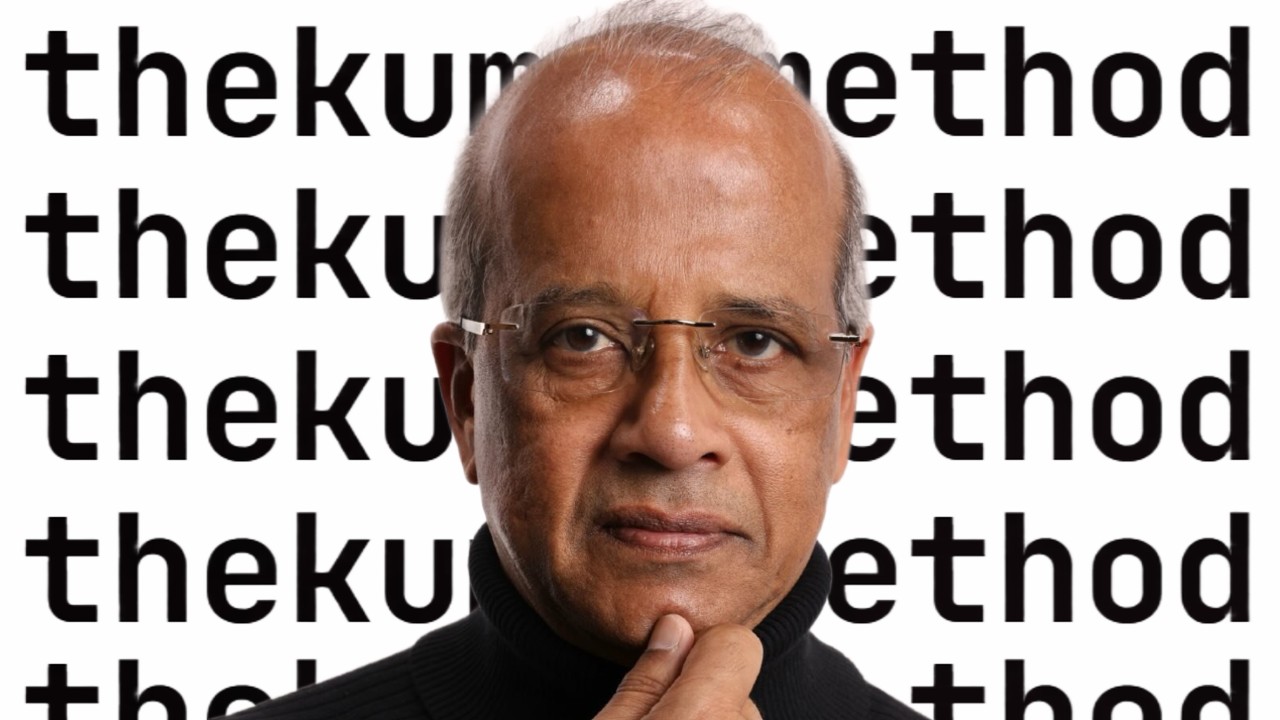
Kumar: an actor, a script, and 35 million views · image via Know Your Meme
The biggest viral creator story of the summer is a 60-something retired accountant who delivers tax advice like he’s about to drop the third-act twist in a Christopher Nolan movie. Slow push-in. Dead stare. “They think depreciation is boring. That is their first mistake.”
35 million views. 772,000 followers. In days. For accounting content.
And here’s the part most of the breathless coverage missed: Kumar doesn’t exist. He’s an actor. The whole thing was built by an anonymous marketer who then (I have to respect the audacity) put it on the campaign’s own website: “I made a nobody go viral on purpose. Kumar was engineered, not lucky.” The grand finale wasn’t a brand deal. It was a course drop. The virality was the sales demo.
Most people hear that and go “ugh, fake.” Wrong reaction. The fact that it was engineered is exactly why it’s worth studying. You can’t copy luck. You can absolutely copy a design, and this one worked in the most hostile test environment imaginable, because if you can make depreciation schedules unskippable, the mechanics will carry literally anything.
So let’s take it apart. Seven things Kumar’s puppeteer did on purpose that you can do on purpose too.
@thekumarmethod on TikTok: tax advice, delivered like a threat
1. He Picked a Collision, Not a Trend
Old accountant + villain monologue. That’s the whole engine. Your brain sees the setup, predicts “boring,” gets served “cinema,” and the prediction error is what keeps your thumb frozen mid-scroll.
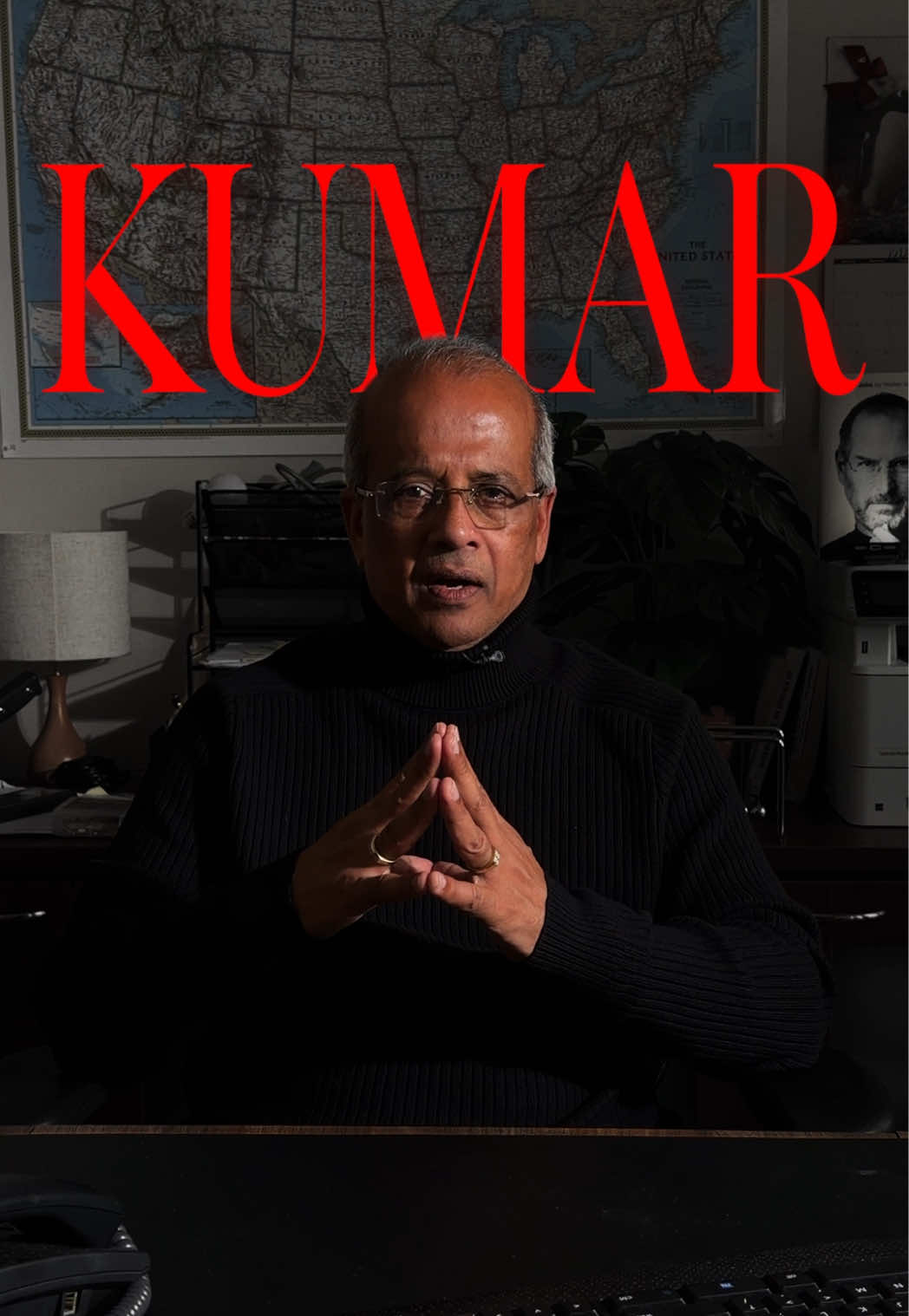
The signature frame: desk, steepled fingers, dead stare · via @thekumarmethod
Everyone chases trends. Trends die in three weeks. A good collision doesn’t age, because it’s not borrowed from the culture. It’s built out of your own niche’s clichés, flipped.
Try it: list the five most predictable things about content in your space. The tone, the setting, the kind of person who fronts it. Now invert the one that would feel most wrong. A law firm that shoots like a nature doc. A skincare chemist who explains ingredients like a detective closing a case. Keep the substance dead serious. That’s important: the expertise is what makes the absurdity land. If someone could swap out your niche and the video still works, your gap isn’t big enough. Dig.
2. He Built a Character, Not a Content Calendar
Nobody follows “accounting tips.” Twenty-seven million people watched “the villain-monologue tax guy.” Feel the difference? One is a topic. The other is a guy.
Here’s the test, and it’s brutal: after two videos, can a stranger describe your account as “the ___ who ___”? If they can’t fill in those blanks, you don’t have a character. You have posts.
For brands this usually means the hardest internal conversation you’ll have this quarter: putting one consistent human (or persona) in front of the camera with a locked-in voice, instead of rotating whoever’s available past a teleprompter. Committees produce content calendars. Characters produce fans.
One Line in the Sand
Kumar’s biography was fiction: fake person, fake backstory. You don’t need that, and if you’re doing paid partnerships you legally can’t do that. The move is stylizing someone real, not inventing someone fake. Turn your founder up to eleven; don’t build a human from scratch. (More on why at the end.)
3. He Launched a Season, Not a Post
The thing that turned one viral video into three-quarters of a million followers: there was already a next episode. And another. The first five days were scripted before day one. Premise, escalation, escalation, twist ( Know Your Meme has the timeline). Land on video three and you immediately scroll back to binge one and two. That scroll-back is the follow.
Meanwhile the rest of us post one experimental video, watch it do okay, and then spend two weeks “seeing how it performs” while the algorithm forgets we were born.
Bank five to seven episodes before you post anything. Same bit, escalating. Post daily while the window’s open. If video one hits and your next upload is nine days later, you didn’t go viral. You briefly appeared.
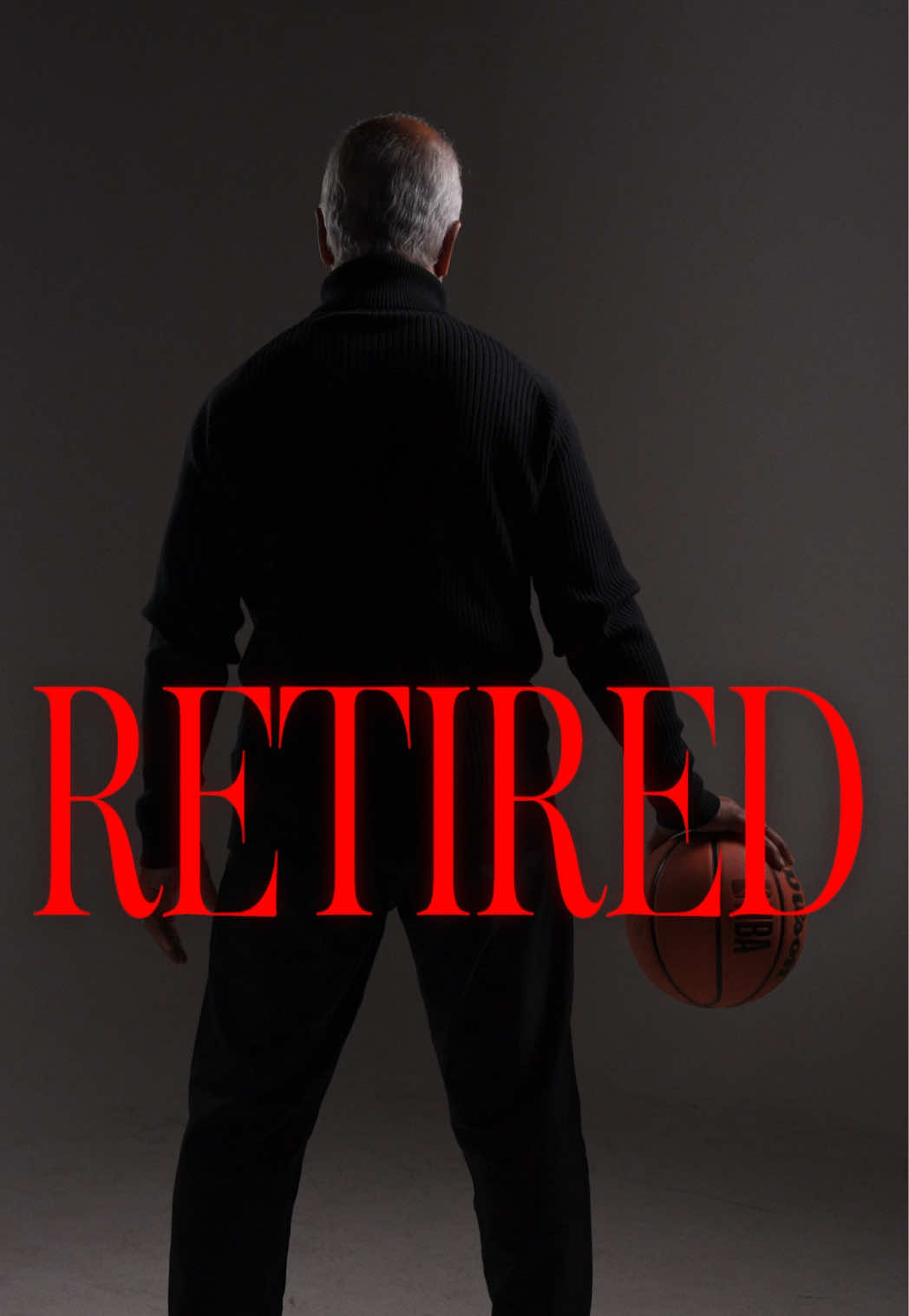
The season escalates: a later episode’s title card · via @thekumarmethod
4. His First Two Seconds Are a Promise He Actually Keeps
Every Kumar video opens mid-monologue with a line that makes no sense unless you keep watching. That’s not clickbait: clickbait is a promise you break. This is a promise you keep. The line plants a specific question, the video answers exactly that question, trust compounds, next video’s hook works even better.
Practical version: write your opening line last, after the video’s cut. Two rules. It has to raise one specific question. The video has to answer that exact question. Cold-open into the middle of the thing. If your first two seconds contain a logo, a “hey guys,” or any form of throat-clearing, you’ve already paid the skip tax.
5. His “Look” Is Cheap, Identical, and Instantly Copyable
Notice nobody describes Kumar’s videos as high production value. They describe them as Kumar videos. Same framing, same push-in, same edit rhythm, same delivery, every single time. The parody accounts nailed the look in one attempt, and that’s not a bug, that’s the certification. A style a stranger can imitate after one viewing is a style the feed can recognize in a quarter-second thumbnail.
Pick three or four visual rules and treat them as law for the whole season. Same shot, same music cue, same closer. Boring and identical beats gorgeous and varied, every time. You’re not making films; you’re minting a pattern.
6. He Built the Joke So Other People Could Tell It
A chunk of Kumar’s reach wasn’t Kumar at all: it was stitches, duets, parodies, and a meme-culture YouTuber’s explainer pulling 186K views in a day. None of that was accidental. The bit is simple enough to describe in a sentence and open enough that anyone can do their own version in their own niche. It’s not just content. It’s a template, and templates travel for free.
Ask this of your format before launch: could some random creator do their version of it in under an hour? If no, tighten the bit. Leave handles sticking out on purpose: a catchphrase to borrow, a structure to fill in. And when parodies show up, don’t send a takedown, send a duet. In character. Every remix is unpaid media pointing at the original.
7. He Knew What the Views Were For Before He Had Them
The least sexy tactic and the most professional one. The June 18 course drop was planned before the June 5 first post. Every viral view had a destination the whole time.
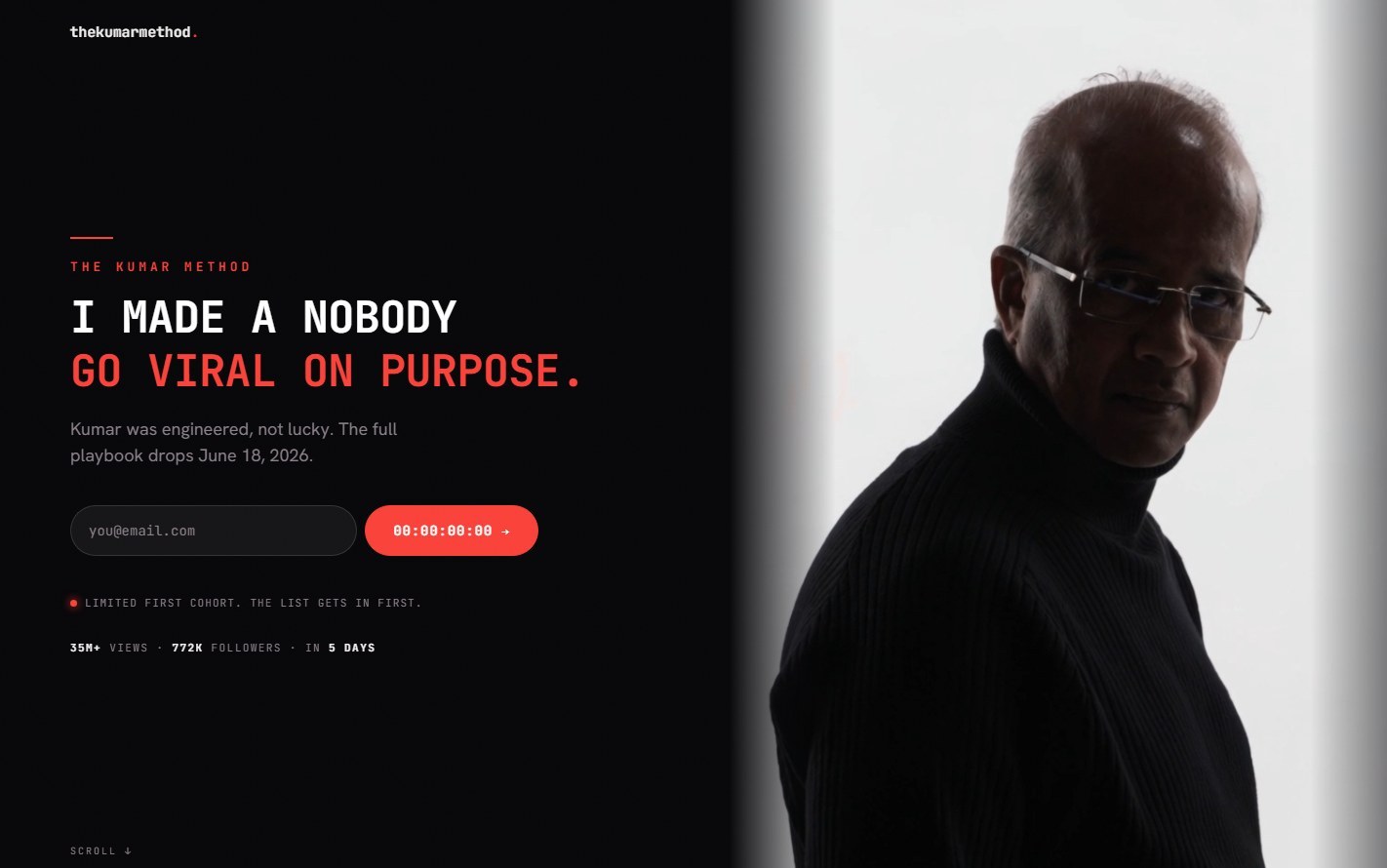
The destination, live at thekumarmethod.co: a confession, an email field, and a countdown
This is where almost everyone gets it backwards: go viral first, “figure out how to monetize” second, then watch a million views evaporate into nothing because there was nowhere for the attention to go. Fireworks, applause, darkness.
Before you post episode one, write down the single thing a hooked viewer should do in week three. Join the list. Book the call. Buy the thing. Then check the character’s world actually leads there naturally. If you can’t name the destination, you’re not ready to launch. You’re just gambling with better graphics.
The Fine Print (Read It, It’s Load-Bearing)
Two things are true at once. The mechanics above are real, extractable, and yours to use. And the case study that proved them was a synthetic person whose “authenticity” was a costume.
Skip the costume part, and not just for ethics. For math. Kumar’s views were real but his trust was fake, and trust is the only asset in this game that compounds. A stylized-but-real founder can carry an audience somewhere for a decade. An invented character has to either keep the mask on forever or cash out fast. (A course-drop funnel is what cashing out fast looks like, which tells you the creator knew it too.)
And one more thing, wearing our own hat for a second: if your job involves paying creators rather than becoming one, Kumar should rattle you a little. One operator, one actor, and a launch plan manufactured 772K followers of real engagement around a person who does not exist. Numbers that would sail through most brands’ media-kit screening. The headline metrics can be conjured now. What can’t be conjured is the shape of the history: how the audience was actually built, over what timeline, out of which humans. That’s the layer we work in at CreatorDB, and post-Kumar it’s not a nice-to-have.
Engineered attention is officially a craft. Fine. Learn the craft, then aim it at something real, because Kumar can’t do that part, and you can.
Vet the History, Not the Headline
CreatorDB tracks how an audience was actually built: growth curves, engagement patterns, and audience data for 30M+ creators. The numbers a media kit can’t conjure.
Explore creators on CreatorDB →Sources: Know Your Meme, thekumarmethod.co, New Engen’s August 2026 trend report. View and follower figures are the campaign’s own claims, which, given the subject matter, is a caveat we’d be hypocrites to skip.