The Only Mobile Gaming Influencer Marketing Guide You Will Ever Need
Reach mobile gamers through influencer marketing. Use strategic templates, proven tactics, and real campaign examples to boost downloads and engagement.
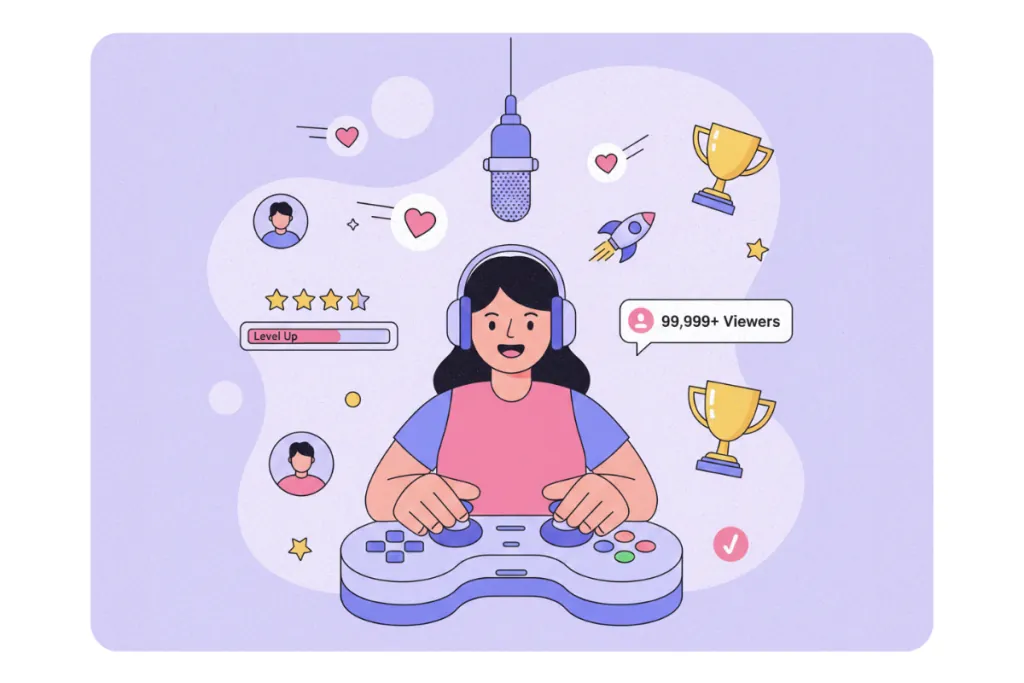
Gaming and influencers have been going hand in hand since before the birth of social media.
Many biggest influencers like PewDiePie, Markiplier, Ninja, and Jacksepticeye built their career on gaming.
Still, many mobile game developers and publishers avoid influencer marketing in their promotion, preferring classic banners or in-app ads.
Not considering influencer marketing for mobile gaming is a significant misstep for an industry deeply intertwined with online content creation.
But what is one mistake is another fortune, and if done correctly, you can use influencer marketing to seize a nice share of the pie.
In this article, you will learn how influencer marketing can change your user acquisition, the best strategies, and what to look out for.
You will also find six content ideas to kickstart your campaign and two real examples of successful mobile gaming influencer marketing campaigns we ran at CreatorDB.
How Will Influencer Marketing Help Your Mobile Game?
Any marketing campaign aims to familiarize your target audience with your product and convince them to buy it.
Mobile gaming is a competitive market, with hundreds of games published daily. Each game will compete for the attention of potential players, and it needs to explain very quickly what makes it worth a try.
Or find a way to establish trust and interest.
By choosing the right influencers, mobile game developers and publishers can present their games to their target audience via a trusted voice.
How Influencers are Different From Other Marketing Channels?
Other marketing channels operate as disruptions: they try to wedge between some of the audience’s activities and drag their attention away from the audience’s desired activity while refocusing it on the promoted product.
Conversely, influencer marketing attaches your message to a piece of content your target audience seeks.
Influencer marketing is less invasive and less prone to prompt adverse reactions and fatigue its audience.
3 Principles to Ace Your Mobile Gaming Influencer Marketing
There are a few things that you have to keep in mind when considering a mobile gaming influencer marketing campaign:
- Partner with fitting influencers
- Consider each influencer’s reputation and track record
- Play with each influencer’s strengths
Partner With Fitting Influencers
There are millions of influencers on social media, with any size of following, from any geography, and covering any content topic imaginable.
Identifying the mobile gaming influencers to whom your target audience turns is essential for a truly effective mobile gaming influencer campaign.
Consider the topics they cover in their content and how they discuss them. Also, consider the language they use, which country they are from, and how they generally match your brand image.
Consider Influencers’ Reputation
Some influencers have a following just to “hate-watch” them. Meaning that the audience has no interest in the opinions expressed, but they enjoy watching a train wreck.
In other cases, some influencer’s reputation is tarnished by controversies and scandals.
From a brand point of view, these situations should be avoided as much as possible.
Another essential thing to consider is the history of sponsorships: if a creator constantly promotes new products and most of its posts are paid promotions, their audience is likely to get tired of it and not pay attention to the messages.
Play at Each Influencer’s Strengths
Personality, content characteristics, and style are why the audience tunes in to any creator.
It is never a good idea to force a particular style or approach on an influencer just because it closely resembles your brand image.
Instead, offer guidelines and allow the influencers to contribute their unique approaches to your product. This way, your promotional material will be more genuine and closely connect the influencer with your brand.
A Strategic Template for Mobile Gaming Influencer Marketing
Your marketing plan should consider three stages: Pre-Launch, Launch, and post-launch.
Each phase has a different focus and approach to maximize the results.
Pre-Launch
The main focus is to build a community. In this phase, you would be the main influencer, sharing exclusive snippets about the game on social media.
The closer the launch date gets, the more you can involve influencers in the effort. You can include them with exclusive beta access, a demo, or even more creative ideas.
If the community you built in this phase is particularly active, consider having them participate in the launch/pre-launch efforts, too.
Launch
Now that the game is ready, it is time to shake the beehive.
Contact many relevant influencers and organize a coordinated release. Focus your efforts on one or two weeks, during which most influencers will post their main pieces of content.
In the following weeks, you can strengthen the message with new creators or reactivate the most successful of the first wave.
Post-Launch
The focus is on maintaining the momentum, retaining the current players, and reaching new ones.
In this phase, it is beneficial to identify the most successful influencers of the first two phases and move them to ambassadors. They will be highly connected to the game and, sort of, its public faces.
Concurrently, you can start planning activities and promotions that involve the community and promote long-term participation.
6 Content Ideas for Your Mobile Gaming Influencer Marketing Campaign
1# Integrations
The classic one-minute game presentation in a video.
This direct approach relies on having the creator explain your game, show some features, and highlight the strong points.
Integrations can be paired with giving out promotional codes to access a better deal.
Even if it is a straightforward way to do things, it packs a punch: Have you ever heard of Raid: Shadow Legends? You likely did, and it was because of its ubiquitous integrations.
2# Let’s plays
Let’s play videos involve an influencer playing a game and providing commentary.
Instead of just a little scripted intermission about your game, you can contact some influencers and propose they try it in front of their audience.
It has a more authentic and unfiltered appeal than integrations.
3# Livestreams
Live streaming brings the strength points of the Let’s Play format up a notch.
It is live, unfiltered exposure to the game. It can also drive audience participation in competitive or cooperative games.
The only downside is that it is live and performs best when the target audience is concentrated in a single or few adjacent time zones.
4# Tournaments
Tournaments are a great way to combine multiple influencers, live streaming, and audience participation.
And they can easily be transformed from a one-off promotion into a yearly occurrence that keeps the audience engaged and
5# Custom content
Custom in-game items can support a mobile game influencer marketing campaign, providing extra incentive to the audience to try the game.
Once again, custom content can be tailored to an influencer’s personality and style to really capture their full potential.
6# Pre-registration campaign
Pre-registration campaigns for mobile games aim to generate interest and expectations around an upcoming game release. They incentivize potential players to get involved with the game before its release, usually by offering exclusive in-game items or other rewards.
2 Successful Examples of Mobile Gaming Influencer Marketing Campaigns
Zooba
Wildlife Studio wanted to boost its user acquisition in the Taiwanese market. They opted to run an influencer campaign to understand how it would have compared to other UA channels.
The campaign encouraged users to try the game while keeping CPM low. Localized material was created and distributed to the influencers involved to entice the users.
The campaign was a success, garnering views and new users.
Erolabs
Erolabs is an adult mobile game publisher. Finding a way to promote their games effectively can be challenging for adult content publishers.
While standard display ads are likely to be seen as untrustworthy and limited to very specific platforms, creating an influencer campaign allowed them to reach a larger and more interested audience.
The campaign delivered an incredible 3% CTR with over 200K views.
Conclusion
Influencer marketing is often neglected when it comes to mobile game promotion. But it has a huge potential.
Promoting your game through less invasive and more trusted channels can reach your target audience more effectively than traditional UA practices.
When the creators involved in your campaign fit the brand image and offer results that meet expectations, your campaign can truly flourish.
Influencer marketing mobile gaming campaigns can be deployed at any point in the life cycle of a game’s marketing efforts:
- Boosting awareness before launch
- Driving the hype at launch
- Maintaining engagement after the launch
Work with CreatorDB
Put this into
practice.
Talk to our Asia agency team about applying these ideas to a real creator campaign — or open the CreatorDB app and start building your shortlist now.
Frequently Asked Questions.
Why should mobile game developers use influencer marketing instead of traditional ads?
Influencer marketing attaches your message to content your target audience actively seeks, whereas traditional channels like banners and in-app ads operate as interruptions. Because influencers are trusted voices, they establish interest and credibility without the audience fatigue or adverse reactions caused by disruptive advertising. This non-invasive approach is especially critical in mobile gaming's crowded market, where hundreds of games launch daily competing for player attention.
What are the key criteria for choosing the right mobile gaming influencer?
Match influencers by audience overlap, language, and geography first. Review their reputation: avoid creators whose audience hate-watches them or who constantly promote products (audience fatigue). Check their sponsorship history and brand alignment. Then let them play to their strengths—personality, content style, and approach—rather than forcing your brand's preferred format. Authentic content from trusted creators converts better than polished pitches.
How should you structure a mobile game influencer campaign timeline?
Structure campaigns in three phases. Pre-launch: build community through your own exclusive snippets, gradually involving influencers via beta access or demos. Launch: leverage influencers' reach at peak visibility. Post-launch: sustain engagement and gather long-term performance data. Each phase has distinct goals; pre-launch focuses on community depth, launch on reach, and post-launch on retention and campaign measurement.
What makes influencer marketing less prone to audience fatigue than paid ads?
Influencer marketing integrates promotion into content your audience voluntarily consumes, not content that interrupts their activity. Creators maintain trust by balancing sponsored and organic posts; when sponsorships flood a feed, audiences disengage. Traditional paid channels, by contrast, are inherently interruptive—they pull attention away from desired activities. This structural difference means influencer messages feel less intrusive and retain audience attention longer.
How does audience fit differ from follower count when selecting mobile gaming influencers?
Follower count alone is irrelevant; a gaming influencer with one million followers whose audience geography or interests don't match your game will underperform. Audience fit means selecting creators whose followers align with your target player demographic and actively engage with gaming content they trust. CreatorDB's data shows engagement and conversions correlate with demographic alignment and creator reputation, not vanity metrics.