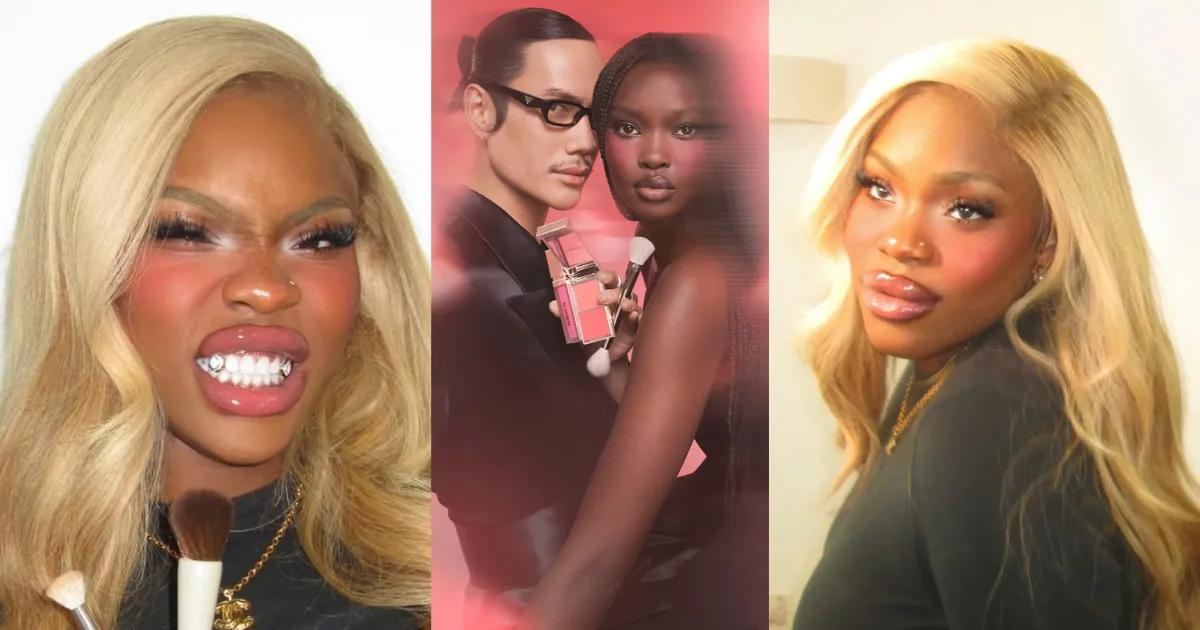
When I first became aware of the situation, there was still some speculation about whether or not Patrick Ta (@patrickta) intentionally ripped off the repopularization and refinement of the transition blush by Painted By Esther (@paintedbyesther). But in recent days, it has become increasingly clear that he has taken from a smaller artist and copied her techniques all for a cash grab. So, in this article, I would like to explore exactly who Patrick Ta stole from, public reactions, and why this is a defining moment in the beauty industry.
Who is Painted By Esther?
If you don’t know Painted By Esther or her influence, here is a quick rundown. Her name is Ngozi Edeme, but on social media, she is known as Painted By Esther. Esther is an independent London-based Black artist who repopularized the transition blush technique while crediting Kevyn Aucoin as the original creator. The look features a beautiful gradient of pigmented blush that extends from under the eye to the cheek.
Her makeup style blew up, especially after doing makeup for Love Island USA reality TV star Olandria Carthen and for icons like Naomi Campbell and H.E.R. It’s through this high-contrast, bold blush look that she built her reputation and signature style. In previous years, the use of bold blushes has become less popular. Instead, we have seen an emphasis on the “clean girl” look where blushes are more sheer. So, Esther’s repopularization of highly pigmented gradient blush is changing beauty trends in modern times.
Additionally, as a creator, she is extremely generous; she makes an effort to share her techniques with her audiences, empowering them to try her looks at home. So, not only has Esther built a reputation for beautiful looks, but she has a reputation for having a beautiful heart as well. In her response video to the controversy regarding Patrick Ta, she states: “I am an artist. My driving force is to create and share it.”
Painted By Esther's response to the controversy
What is the Controversy Between Painted By Esther and Patrick Ta?
In May 2026, Patrick Ta released his “Major Headlines Double-Take Crème & Powder Blush Duo.” In the marketing for this product, he called it a “transition blush,” and his tutorials on how to use it were strikingly similar to Esther’s tutorials published online. Techniques of using powder after applying blush had never been seen in any of Ta’s work before, so many audiences found it extremely difficult to believe his illusion of originality.
Worsening his case, Esther had come out saying how one of his team members booked a standard makeup appointment with her and later tried to request to film the appointment. This booking was then canceled by Esther because she felt the filming portion was not something she had agreed to.
In any case, this controversy is not only a conversation about how a smaller creator has been pushed out of a landscape they helped paint by a large corporation but also a continued history of erasure of Black aesthetics and beauty trends. This is not the first time a Black beauty trend has been rebranded and profited from by non-Black people. For example, the XXL nail trend was notably seen on many big celebrities in the early 2000s. But the trend didn’t start with the Kardashians; it started with Black women in the 80s and 90s who fashioned them as a celebration of Black culture. The trend continues today with popular music artists Megan Thee Stallion and Cardi B.
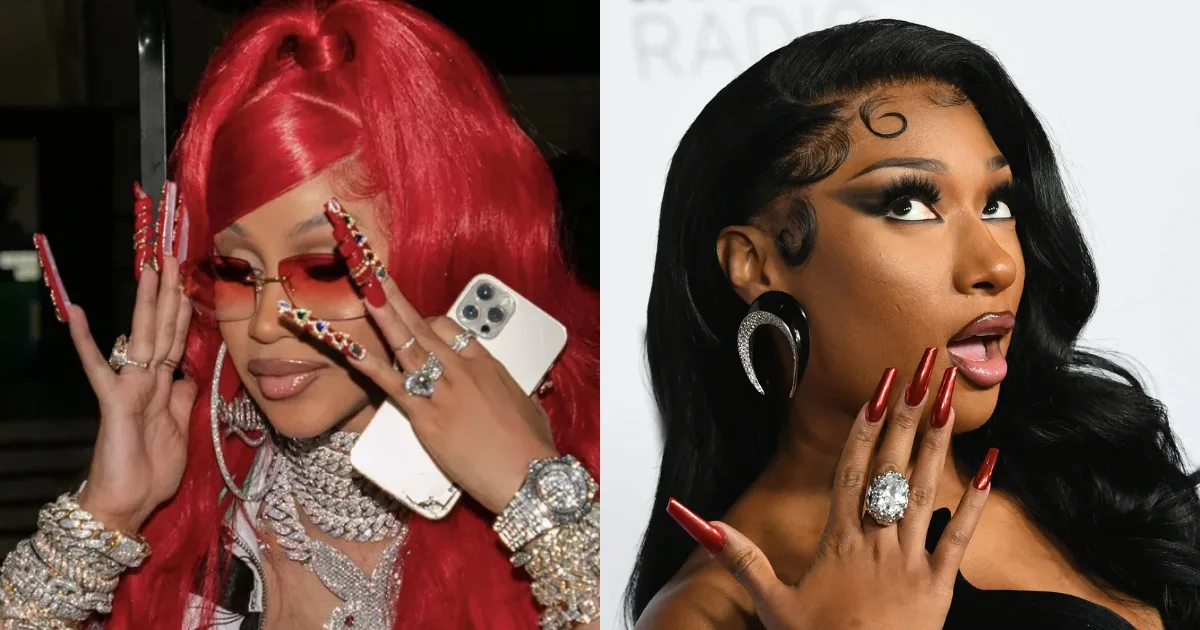
Cardi B (left) and Megan Thee Stallion (right) — continuing a nail trend that started with Black women decades before it went mainstream.
How Was the Internet’s Reaction?
Well… Let’s just say the internet had some things to say. Many people came to Esther’s defense, making sure to credit her influence. People were also especially frustrated by his trademark on the phrase “transition blush,” implying that he believed himself to be the sole pioneer of this technique. To consumers, this looked like a cash grab and his attempt to block Esther from ever profiting from her technique and influence. Yet, a few commenters believed the controversy was “just business” and that Patrick Ta’s disingenuity was a natural part of the process. They claimed that Esther should have patented her “transition blush” earlier. To that, she responded that she does not claim to be the owner or sole creator of this technique.
Public outrage reached the point where Patrick Ta’s team could not remain silent, so Ta credited Painted By Esther and said he had never claimed to “own the look.” Despite having said in an interview with BYRDIE: “So I created an entirely new blush category focused specifically on the ‘in-between’[…].”And he still defended his blush product, saying it was tailored to his own technique, which he began developing in 2021. Still, public opinion seems to side with Esther, and many companies have followed suit. NYX Cosmetics and Kevyn Aucoin’s team have publicly come out in support of Esther and her impact.
Kevyn Aucoin's team publicly supporting Painted By Esther
So, What Are the Main Takeaways From This Controversy?
Many small creators in the digital landscape have their intellectual property stolen by large corporations with no moral obligations. Moreover, corporations keep taking from smaller artists because true art and creations don’t come from within the walls of a corporate meeting; they come from creators connected to creative inspirations, cultural moments, and real passion for a craft.
- The theft of smaller creators’ work needs to stop, especially the continued erasure of Black artists and aesthetics. Rebranding cultural trends into corporate creations is not what people want to see.
- There should be greater emphasis on avoiding consumerism as a consumer. Don’t buy into everything you see. More often than not, there are contextual factors surrounding a product that could change your desire to purchase it.
Even though Patrick Ta trademarked the phrase “transition blush” and gained at least some profit from the idea, Esther is the one everyone will remember as a pioneer and creative behind the high-contrast looks we see growing in popularity today.
Discover the Creators Shaping Beauty Trends
CreatorDB gives you access to data on millions of creators across YouTube, Instagram, and TikTok — so you can find the artists driving real cultural moments before the conglomerates catch on.
Search Creators Free →