United States
Synthesis.Is is the official social media presence for Synthesis, a U.S.-based EdTech platform that traces its origins to the experimental school built inside SpaceX — known informally as Ad Astra…

Total Followers +0.8%
175K
Across Instagram
Primary Platform
YouTube
175K followers · 100% of audience
Engagement
0.7%
vs. 1.5% category median
Sponsorship Tier
Mid
Est. $3.5K–$8.7K / IG post
| Platform | Followers | 30d Growth | Engagement | Posts / wk | Last upload |
|---|---|---|---|---|---|
| 174,762 | +1K | 0.7% | 1 | 1 months ago |
| Window | Combined | |||
|---|---|---|---|---|
| Last 7 days | +402 +0.2% | +0 +0.0% | +0 +0.0% | +402 |
| Last 30 days | +1K +0.8% | +0 +0.0% | +0 +0.0% | +1K |
| Last 90 days | +7K +3.9% | +0 +0.0% | +0 +0.0% | +7K |
| Last 365 days | +7K +3.9% | +0 +0.0% | +0 +0.0% | +7K |
Daily follower snapshots from CreatorDB's longitudinal index.
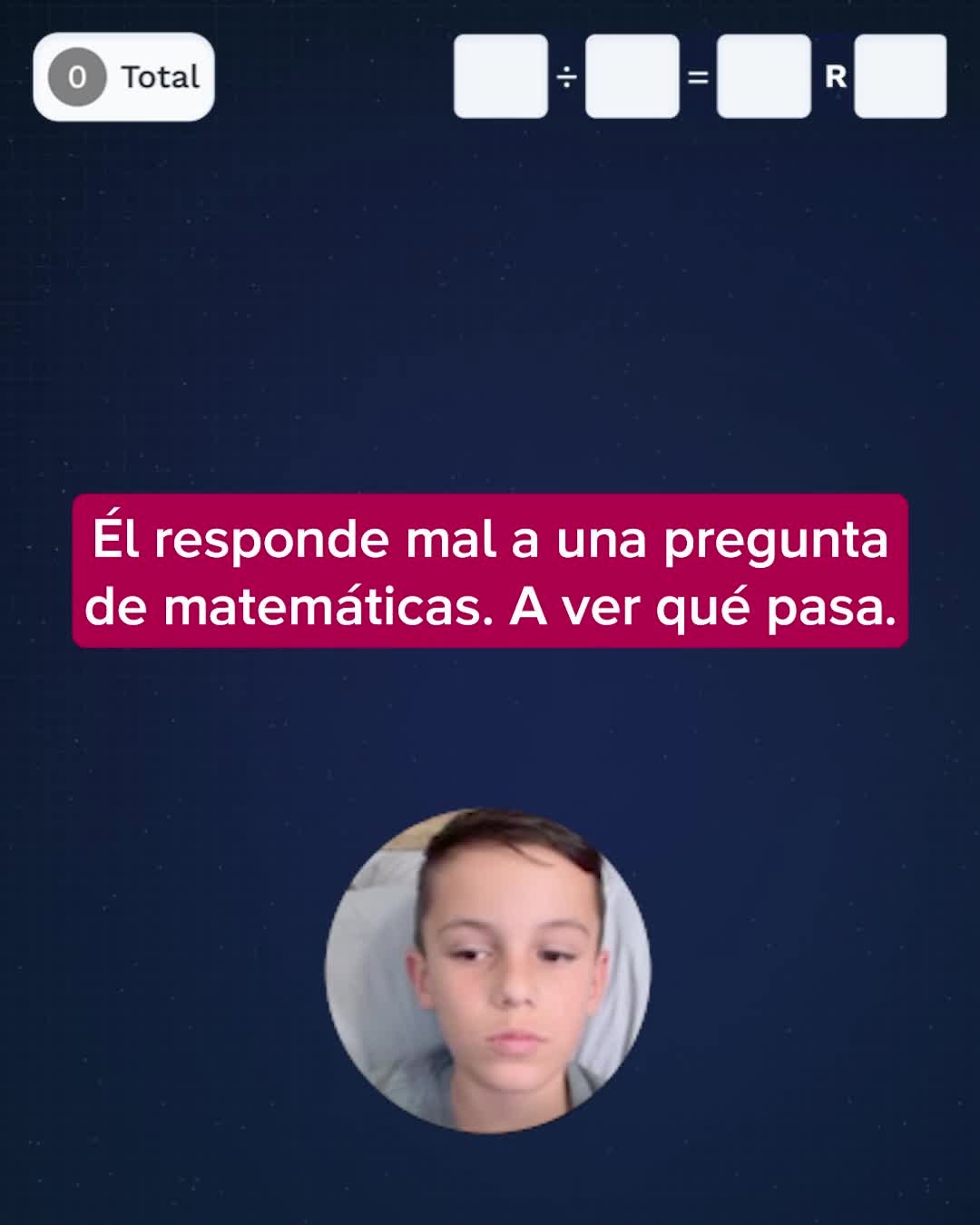
Synthesis.Is is the official social media presence for Synthesis, a U.S.-based EdTech platform that traces its origins to the experimental school built inside SpaceX — known informally as Ad Astra — where a simulation-driven, game-based approach to learning was developed for the children of SpaceX employees. That pedagogical DNA carries directly into the Synthesis product and its content: rather than drilling rote formulas, the platform frames math and problem-solving as collaborative, systems-level challenges. On Instagram, the account translates that philosophy into short-form educational content aimed at parents of elementary-age children, leaning heavily on hashtags like #homeschoolmath, #kindergartenmath, and #parentingtips to reach caregivers actively searching for alternatives to conventional curricula.
The account's mid-tier following is overwhelmingly U.S.-based, with secondary reach in the U.K. and Canada — English-speaking markets where interest in homeschooling and supplemental education tools has grown steadily. The audience skews notably male and concentrates in the 18–34 age band, a profile that aligns with tech-forward younger parents drawn to the platform's Silicon Valley origin story. Engagement sits below the category median, a pattern common for brand-operated educational accounts competing against individual creator voices in the parenting and edtech space. As Synthesis continues scaling its subscription product, the Instagram channel functions less as a pure creator play and more as a top-of-funnel brand asset — making it most naturally suited to partnerships with family-focused software, STEM toy brands, and learning-platform aggregators rather than traditional influencer campaigns.
Synthesis.Is reaches an audience concentrated in United States primarily through YouTube, and is best activated via Instagram Reels and Stories. As an education creator they map naturally to brands targeting that space. With no brand deals logged yet, they read as an available, category-aligned partner for advertisers building early presence in the space. Engagement on YouTube runs around 0.7%, which points to an audience better suited to category-relevant, mid-funnel campaigns than to pure-reach buys. Their YouTube-first format lends itself to integrations that sit inside the creator's usual content rather than running as standalone ads. Because the audience follows education content rather than arriving through untargeted reach, sponsorships that match the channel's subject matter tend to convert more efficiently than broad placements. A consistent, on-topic posting focus gives sponsors a predictable, brand-safe environment, lowering placement risk compared with broad, general-interest channels. Campaigns here are best measured on qualified engagement and consideration within the niche rather than on raw impression volume. For United States-focused brands in education and related categories, Synthesis.Is offers a defined, creative-fit audience rather than broad, low-intent impressions.
Benchmark estimates for a creator at Synthesis.Is's tier (Mid, 175K combined followers, United States). Pulled from CreatorDB's category benchmarks.
The CreatorDB Agency runs end-to-end influencer campaigns globally — shortlisting, outreach, contracting, and performance reporting. Talk to our team about building a campaign around creators in this niche.
Yes — Synthesis describes itself as having been designed at the SpaceX lab school, referring to Ad Astra, the private school Elon Musk founded for children of SpaceX employees. The curriculum was built to develop rigorous problem-solving skills in a way traditional schooling rarely does, and that founding philosophy still drives the platform today.
Synthesis was co-founded by Josh Dahn, who served as head of school at Ad Astra, the SpaceX-linked private school. After seeing what a problem-solving-first curriculum could do for students, Dahn launched Synthesis as a standalone product open to any family, not just those connected to SpaceX.
Originally, the Synthesis curriculum was developed exclusively inside Ad Astra, a private school on the SpaceX campus that was accessible only to employees' children. It later spun out as a public subscription platform, bringing the same collaborative, game-based learning approach to families around the world.
Synthesis is a subscription-based learning platform that uses collaborative simulation games to teach kids critical thinking and problem-solving. It is not a tutoring service or a flashcard drill app — children work through open-ended challenges, often alongside other students in real time, building reasoning skills rather than simply memorizing procedures.
Synthesis targets elementary and middle school-aged children, with social content spanning kindergarten math all the way through more advanced problem-solving challenges. The game-based structure keeps younger kids engaged while still offering enough complexity to stretch older learners.
Synthesis has become a popular pick among homeschooling families looking for a structured but non-drill approach to math and critical thinking. Its self-paced, game-based format fits naturally into home education routines, and the platform's own content explicitly speaks to the homeschool community through dedicated hashtags and parenting tips.
Yes — Synthesis promotes a free trial directly in its social media bio, encouraging parents to test the platform before committing to a subscription. This gives families a chance to see how their child responds to the problem-solving game format before signing up for a paid plan.
Where most math apps focus on drilling correct answers, Synthesis focuses on how kids think through problems — a direct carry-over from its origins at the SpaceX lab school, where the goal was training students to tackle hard, open-ended challenges. The platform uses collaborative simulations rather than worksheets, making the experience feel much closer to a strategy game than a textbook exercise.
Math and quantitative reasoning form the core of the Synthesis curriculum, reflected in its consistent use of elementary math, kindergarten math, and mathematics-focused content. That said, the broader emphasis on critical thinking means skills like logic, strategy, and collaborative decision-making are woven into every session rather than treated as separate subjects.
The audience skews overwhelmingly adult, concentrated in the 18–34 age range, which indicates the account primarily reaches parents and caregivers rather than children themselves. This aligns with Synthesis's content strategy, which is largely aimed at helping adults understand the value of a problem-solving-first education before enrolling their child.
Stats (followers, engagement, audience demographics, growth) are pulled live from the CreatorDB API covering YouTube, Instagram and TikTok. Bio and FAQ content is AI-assisted; news items are sourced from cited public press at generation time. Read the full methodology →
If you'd like to update, correct, or remove this profile, get in touch and we'll handle it within 5 business days. We don't publish private data — every stat shown comes from your public platform profiles.
@synthesis.is · YouTube
+0 new followers
Preparing fresh data…
This usually takes 15–25 seconds.