United States
Strava is a San Francisco-based fitness technology company whose social media presence functions as a community marketing platform for its GPS activity-tracking app, which serves runners, cyclists, and a growing range of active sports participants worldwide.
Total Followers +1.9%
2.2M
Across Instagram, TikTok
Primary Platform
YouTube
2M followers · 91% of audience
Engagement
0.5%
vs. 1.5% category median
Sponsorship Tier
Macro
Est. $24K–$57K / IG post
Announced at Samsung Galaxy Unpacked, the partnership puts Strava on upcoming Galaxy Watches worldwide, giving the platform a major device-level distribution boost.
GPS-tracked runs, rides, hikes and walks on Strava now convert directly into adiClub reward points, turning everyday activity into brand currency.
Strava partnered with Stanford Lifestyle Medicine and Stanford's Female Athlete Science & Translational Research (FASTR) program to bring evidence-based insights to its global user base.
The major product update added visual muscle maps, a dedicated strength log, and integrations with Garmin, WHOOP, Fitbod and 11 other partners — targeting the platform's fastest-growing sport category.
The company hired Goldman Sachs to lead the IPO and added former Peloton CEO Barry McCarthy to its board in January 2026. No concrete listing date has been confirmed as of mid-2026.
| Window | TikTok | Combined | ||
|---|---|---|---|---|
| Last 7 days | +10K +0.5% | +506 +0.3% | +0 +0.0% | +10K |
| Last 30 days | +37K +1.8% | +4K +2.0% | +0 +0.0% | +41K |
| Last 90 days | +125K +6.2% | +15K +7.5% | +0 +0.0% | +140K |
| Last 365 days | +125K +6.2% | +15K +7.5% | +0 +0.0% | +140K |
Daily follower snapshots from CreatorDB's longitudinal index.
Strava is a San Francisco-based fitness technology company whose social media presence functions as a community marketing platform for its GPS activity-tracking app, which serves runners, cyclists, and a growing range of active sports participants worldwide. Founded in 2009 by Mark Gainey and Michael Horvath, Strava built its reputation as the social network for athletes before broadening its appeal to casual fitness enthusiasts. Its branded social channels — most prominently Instagram — lean into user-generated and creator-partnered storytelling, spotlighting real members and city-specific running culture rather than product-forward advertising. Recent content themes around major race events like the NYC and Berlin Marathons, along with city exploration series, reflect a content strategy designed to position Strava as a lifestyle and community brand, not merely a utility app.
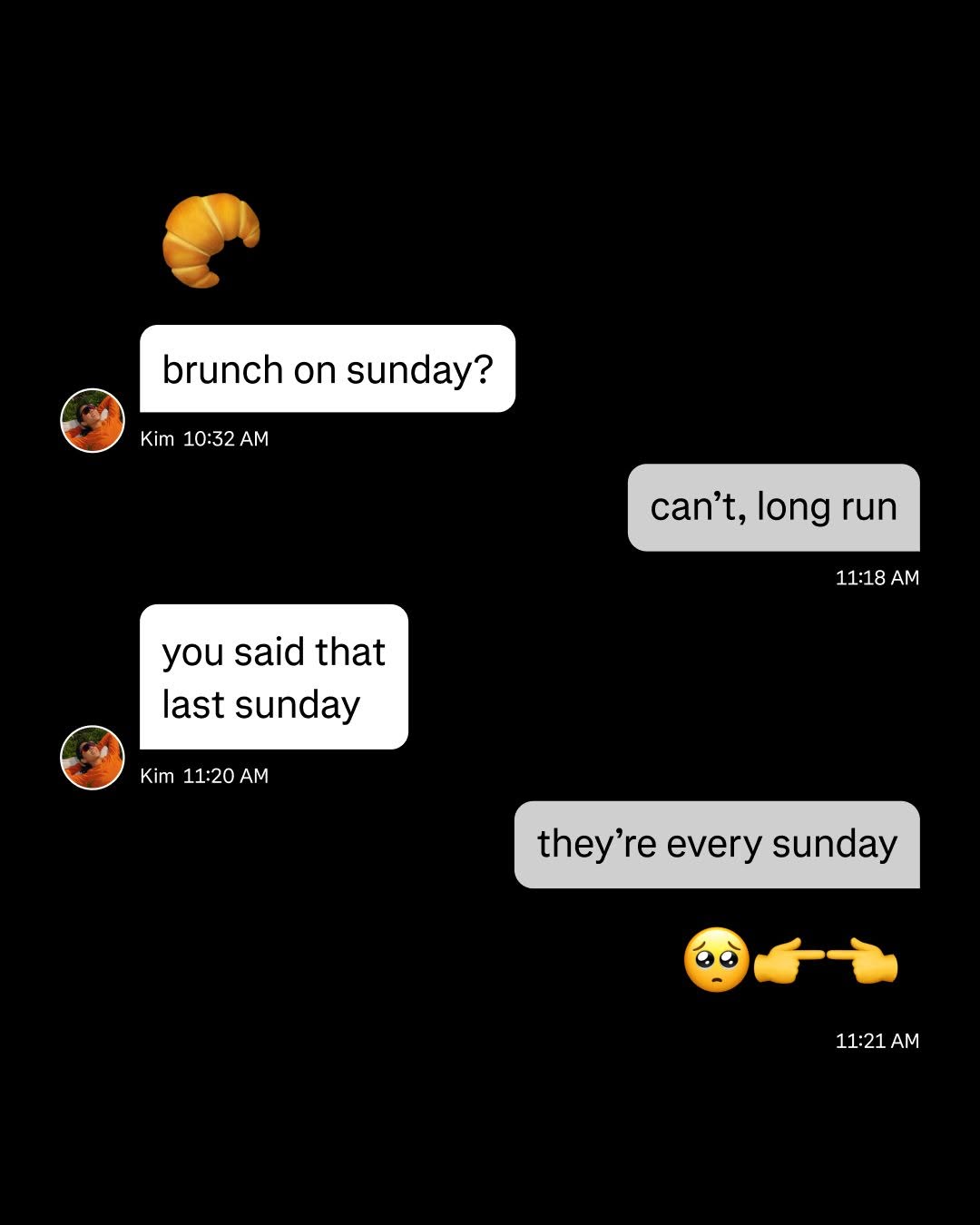
The channel's audience skews toward millennial and younger Gen X adults aged 25–44, with a slight female majority, reflecting the demographic shift Strava has pursued as it works to move beyond its historically male, competitive-cycling core. Engagement on Instagram sits below the category median — a common pattern for large brand accounts where reach outpaces interaction — though TikTok shows meaningfully stronger relative engagement, suggesting the shorter-form channel better suits discovery-driven audiences. The #stravapartner and #iamspartner hashtags signal an active creator affiliate program, positioning the brand as a media buyer and community amplifier simultaneously. As fitness app competition intensifies, Strava's social content increasingly serves as proof of cultural relevance, and its partnership infrastructure gives it durable access to niche athletic micro-communities that pure advertising cannot easily reach.
Strava reaches an audience concentrated in United States primarily through YouTube, and is best activated via Instagram Reels and Stories, TikTok branded content. As a fitness creator they map naturally to brands targeting that space. With no brand deals logged yet, they read as an available, category-aligned partner for advertisers building early presence in the space. Engagement on YouTube runs around 0.5%, which points to an audience better suited to category-relevant, mid-funnel campaigns than to pure-reach buys. The channel's mix of Instagram Reels and Stories and TikTok branded content lets a sponsor choose between short awareness placements and longer, more detailed integrations. Because the audience follows fitness content rather than arriving through untargeted reach, sponsorships that match the channel's subject matter tend to convert more efficiently than broad placements. A consistent, on-topic posting focus gives sponsors a predictable, brand-safe environment, lowering placement risk compared with broad, general-interest channels. Campaigns here are best measured on qualified engagement and consideration within the niche rather than on raw impression volume. For United States-focused brands in fitness and related categories, Strava offers a defined, creative-fit audience rather than broad, low-intent impressions.
Benchmark estimates for a creator at Strava's tier (Macro, 2.2M combined followers, United States). Pulled from CreatorDB's category benchmarks.
The CreatorDB Agency runs end-to-end influencer campaigns globally — shortlisting, outreach, contracting, and performance reporting. Talk to our team about building a campaign around creators in this niche.
Yes — in early 2018, Strava's global activity heatmap, which visualized billions of GPS-tracked workouts, inadvertently revealed the locations and patrol routes of classified military installations in conflict zones because soldiers had been logging runs with the app. The incident became a major international security story and forced Strava to overhaul its privacy settings, making it one of the most consequential data-privacy episodes in consumer tech history.
A Strava Segment is a user-defined stretch of road or trail that functions as a permanent live leaderboard — every time you ride or run through it, your time is ranked against everyone else who has ever completed it. The fastest man holds the KOM (King of the Mountain) and the fastest woman holds the QOM (Queen of the Mountain), making Segments one of the most competitive and community-driven features on the platform.
Kudos is Strava's equivalent of a social media 'like,' but framed as a cheer — tapping the fist-bump icon on a friend's activity is a way of celebrating their effort rather than just reacting to content. It's a deliberately simple social gesture designed to build encouragement and accountability across the athlete community.
Strava has a free tier that covers core GPS activity tracking, basic social features like Kudos and clubs, and a limited activity feed. A paid subscription unlocks deeper tools including detailed training analytics, full Segment leaderboards, route planning, and heart rate analysis — features aimed at more serious athletes who want performance data beyond just logging miles.
The Strava Partner program lets brands, gear companies, races, and fitness organizations run official challenges, clubs, and campaigns directly inside the Strava app, reaching its large community of active users where they already track their workouts. When you see #stravapartner on social posts, it typically signals a brand has integrated a sponsored challenge or event into the platform.
Strava uses major international road races like the New York City Marathon and the Berlin Marathon as content and community moments, running in-app challenges tied to race day and amplifying athlete stories around those events on social media. Hashtags like #nycmarathon, #berlinmarathon, and #raceday are central to how Strava shows up during the biggest dates on the global running calendar.
Strava was founded in 2009 by Mark Gainey and Michael Horvath, two Harvard roommates and avid cyclists who wanted to recreate the feeling of training alongside teammates even when working out alone. The company is headquartered in San Francisco, California, and has grown into one of the most widely used fitness tracking platforms in the world.
Strava is compatible with a wide range of GPS watches and cycling computers including Garmin, Apple Watch, Wahoo, Polar, and Suunto, and it also connects with platforms like Apple Health and Google Fit. This broad hardware compatibility is a core reason Strava functions as a central social layer for athletes who use different devices — you track on your preferred hardware and share on Strava.
While Strava is most associated with running and road cycling, the app supports a wide range of activities including swimming, hiking, trail running, indoor cycling, weight training, yoga, and more. Their own branding positions it as 'the app for active people' broadly, not just endurance athletes, which is reflected in a diverse and growing activity type library.
Strava has been producing city-portrait content — such as videos spotlighting the athletic community in Atlanta — that shows how runners and cyclists experience specific urban environments, often collaborating with local creators and filmmakers. This city-focused format reflects a broader content strategy built around community and place, reinforcing Strava's identity as a social network for active people rather than just a data-logging tool.
Stats (followers, engagement, audience demographics, growth) are pulled live from the CreatorDB API covering YouTube, Instagram and TikTok. Bio and FAQ content is AI-assisted; news items are sourced from cited public press at generation time. Read the full methodology →
If you'd like to update, correct, or remove this profile, get in touch and we'll handle it within 5 business days. We don't publish private data — every stat shown comes from your public platform profiles.
@strava · YouTube
+0 new followers
Preparing fresh data…
This usually takes 15–25 seconds.