United Kingdom
The National Trust is one of the United Kingdom's foremost conservation charities, founded in 1895 to protect historic houses, gardens, coastlines, and countryside for public benefit across England, Wales, and Northern Ireland.
Total Followers +0.7%
1.7M
Across Instagram, TikTok
Primary Platform
YouTube
1.5M followers · 89% of audience
Engagement
3.5%
vs. 1.5% category median
Sponsorship Tier
Macro
Est. $18K–$42K / IG post
A peer-reviewed study provided the first clear evidence that eco-moorings can restore damaged seagrass meadows, with anchor scars in Studland Bay, Dorset, shrinking dramatically — a landmark conservation win for the Trust.
The family home designed by architects Richard and Su Rogers — credited with inspiring some of the world's most celebrated buildings — was given to the nation by the Rogers family.
A wildfire starting 29 July razed an area equivalent to 220 football pitches at Dunwich Heath, wiping out some of the UK's rarest habitats. The Trust launched a public emergency appeal and called on the Government to strengthen climate action.
Philanthropist Humphrey Battcock pledged the historic gift, described as a "huge boost" by director-general Hilary McGrady, arriving as the charity reported costs exceeding income by over £50m.
The Trust invited artists and organisations to reimagine timber saved from the illegally felled tree, while 49 saplings grown from the original sycamore were set to be planted in communities across the UK.
| Window | TikTok | Combined | ||
|---|---|---|---|---|
| Last 7 days | +3K +0.2% | +1K +0.7% | +0 +0.0% | +4K |
| Last 30 days | +9K +0.6% | +3K +1.6% | +0 +0.0% | +12K |
| Last 90 days | +30K +2.0% | +27K +14.2% | +0 +0.0% | +57K |
| Last 365 days | +30K +2.0% | +27K +14.2% | +0 +0.0% | +57K |
Daily follower snapshots from CreatorDB's longitudinal index.
The National Trust is one of the United Kingdom's foremost conservation charities, founded in 1895 to protect historic houses, gardens, coastlines, and countryside for public benefit across England, Wales, and Northern Ireland. On social media, the organisation has built a macro-scale following by translating its estate-wide mission into content spanning Tudor history, coastal ecology, climate resilience advocacy, and atmospheric glimpses of Britain's most celebrated landscapes. Its approach blends heritage storytelling — including coverage of culturally charged moments such as the illegal felling of the Sycamore Gap tree at Hadrian's Wall — with environmental campaigns around issues like seagrass restoration and wildfire policy.
The audience skews notably young and female, suggesting the National Trust's digital channels are reaching a demographic considerably younger than its traditional membership base — a meaningful strategic shift for the charity. Strong engagement rates, especially on TikTok, indicate content that resonates well beyond passive scrolling, and the substantial US share of followers reflects genuine international appetite for British heritage and countryside content. Rather than conventional influencer sponsorships, the National Trust's social presence operates as an awareness and advocacy platform, positioning it as a compelling institutional partner for brands and bodies aligned with conservation, sustainable tourism, and cultural stewardship.
Nationaltrust reaches an audience concentrated in United Kingdom primarily through YouTube, and is best activated via Instagram Reels and Stories, TikTok branded content. As a travel creator they map naturally to brands targeting that space. With no brand deals logged yet, they read as an available, category-aligned partner for advertisers building early presence in the space. Engagement on YouTube runs around 3.5%, which points to an audience better suited to category-relevant, mid-funnel campaigns than to pure-reach buys. The channel's mix of Instagram Reels and Stories and TikTok branded content lets a sponsor choose between short awareness placements and longer, more detailed integrations. Because the audience follows travel content rather than arriving through untargeted reach, sponsorships that match the channel's subject matter tend to convert more efficiently than broad placements. A consistent, on-topic posting focus gives sponsors a predictable, brand-safe environment, lowering placement risk compared with broad, general-interest channels. Campaigns here are best measured on qualified engagement and consideration within the niche rather than on raw impression volume. For United Kingdom-focused brands in travel and related categories, Nationaltrust offers a defined, creative-fit audience rather than broad, low-intent impressions.
Benchmark estimates for a creator at Nationaltrust's tier (Macro, 1.7M combined followers, United Kingdom). Pulled from CreatorDB's category benchmarks.
The CreatorDB Agency runs end-to-end influencer campaigns globally — shortlisting, outreach, contracting, and performance reporting. Talk to our team about building a campaign around creators in this niche.
The iconic Sycamore Gap tree, which stood beside Hadrian's Wall on National Trust-managed land in Northumberland, was illegally felled in late September 2023. The tree had been one of England's most photographed landmarks and its destruction caused widespread public grief. The National Trust has since been working to propagate saplings grown from the original tree's seeds, aiming to preserve its genetic legacy for future generations.
The National Trust is an independent conservation charity, not a government agency or department. Founded in 1895, it operates under its own legislation — the National Trust Acts — which gives it a unique legal standing and genuine independence from ministerial control. This surprises many people who assume it is part of the official heritage establishment alongside bodies like Historic England.
The National Trust operates in England, Wales, and Northern Ireland — Scotland is served by the entirely separate National Trust for Scotland, which is its own legally and operationally independent charity. The two organisations share similar conservation missions but are not the same body and have separate memberships. Cross-membership arrangements do exist for visitors who want access to properties in both.
The National Trust cares for a number of significant Tudor and Elizabethan properties, including Hardwick Hall in Derbyshire — an exceptional late-16th-century house — and Lacock Abbey in Wiltshire, which has medieval and Tudor origins. Their social channels regularly surface Tudor history content, from the architecture of these grand estates to the stories of the families who lived in them. Hashtags like #tudorhistory are a consistent part of how they reach history enthusiasts online.
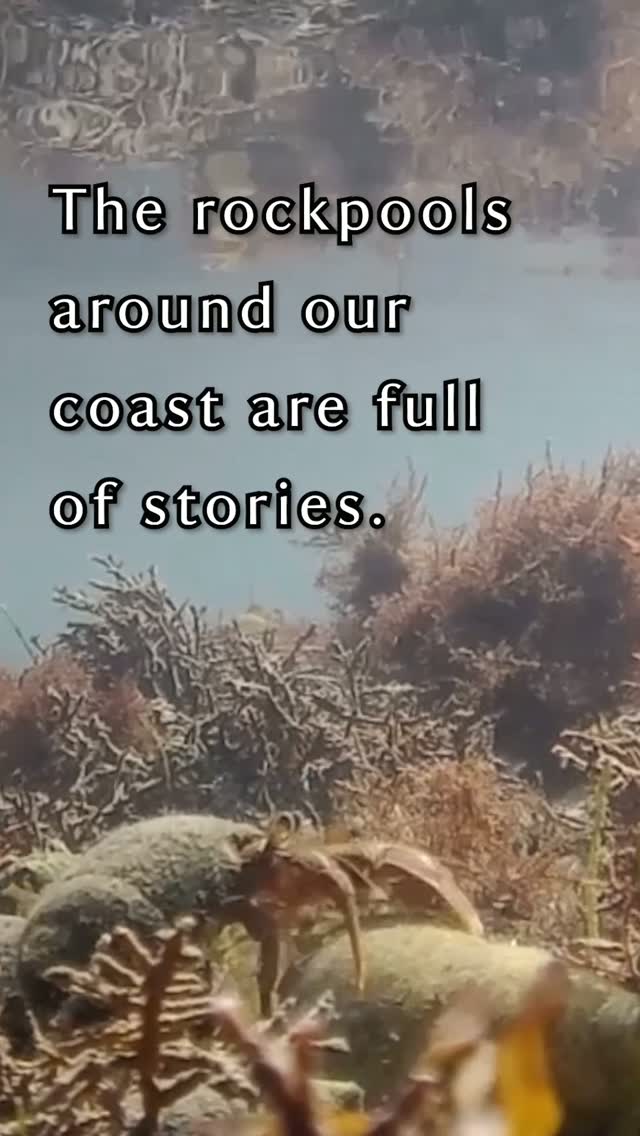
The National Trust has been involved in seagrass restoration as a core part of its climate resilience work, with projects along the Welsh coast and at sites like Studland Bay in Dorset. Seagrass meadows capture carbon, stabilise seabeds, and provide critical habitat for marine life, making them a priority in nature recovery efforts. The Trust uses its social platforms to raise public awareness of why these underwater ecosystems matter and what threatens them.
Studland Bay is a stretch of coastline and heathland in Dorset that the National Trust manages as part of its coastal estate. It is home to rare wildlife — including all six of the UK's native reptile species — and features dunes, heathland, and a popular beach. The Trust has also been actively working to protect the bay's seagrass beds, which face pressure from boat anchoring and other human activity.
The National Trust's TikTok bio has featured a direct link to a wildfire petition focused on the growing threat of wildfires to UK heathlands, moorlands, and other habitats the Trust manages. Increasingly dry and warm conditions linked to climate change have raised the risk of damaging fires across protected landscapes. The petition calls for stronger national action to reduce wildfire risk and protect these irreplaceable natural ecosystems.
Yes, the National Trust manages the River Wey Navigation in Surrey, one of the earliest navigable river systems in England, with its history stretching back to the 17th century. The Trust maintains the locks, towpaths, and surrounding countryside along this historic waterway. It is one of the lesser-known but genuinely significant sites in the Trust's portfolio, sitting alongside its famous stately homes and coastal nature reserves.
The National Trust is primarily funded through membership subscriptions, admission fees to its properties, donations, and charitable legacies left by supporters. Membership income from its millions of paying members across the UK is its largest single revenue stream. It does not receive regular government grants, though it can access public funding for specific conservation and nature recovery programmes.
The National Trust has built a following of well over a million on Instagram alone, making it one of the most-followed conservation charities in the UK on social media. Its engagement rate runs notably above the category average, reflecting how strongly audiences connect with its content about heritage, nature, and British landscapes. It is also active and growing on TikTok, where short-form content about nature and history campaigns has found a younger audience.
Stats (followers, engagement, audience demographics, growth) are pulled live from the CreatorDB API covering YouTube, Instagram and TikTok. Bio and FAQ content is AI-assisted; news items are sourced from cited public press at generation time. Read the full methodology →
If you'd like to update, correct, or remove this profile, get in touch and we'll handle it within 5 business days. We don't publish private data — every stat shown comes from your public platform profiles.
@nationaltrust · YouTube
+0 new followers
Preparing fresh data…
This usually takes 15–25 seconds.