United States
Dr. Starkid is the science communication project of Dakotah Tyler, a credentialed PhD astrophysicist based in the United States who has built a multi-platform following across TikTok, Instagram, and YouTube.
Total Followers +6.1%
565K
Across Instagram, TikTok
Primary Platform
YouTube
210K followers · 37% of audience
Engagement
8.5%
vs. 1.5% category median
Sponsorship Tier
Mid
Est. $4.2K–$10K / IG post
Dakotah Tyler confirmed his first book — 'The Universe Playbook: Lessons on Life from the Stars' — is forthcoming from Johns Hopkins University Press, exploring what the cosmos can teach about resilience and purpose.
Tyler publicly announced via LinkedIn that he is now working full-time as a science communicator, podcast host, author, and keynote speaker, citing a community of over one million followers across platforms.
| Window | TikTok | Combined | ||
|---|---|---|---|---|
| Last 7 days | +4K +2.1% | +4K +1.0% | +0 +0.0% | +8K |
| Last 30 days | +15K +7.3% | +19K +5.3% | +0 +0.0% | +34K |
| Last 90 days | +37K +17.4% | +47K +13.2% | +0 +0.0% | +83K |
| Last 365 days | +37K +17.4% | +47K +13.2% | +0 +0.0% | +83K |
Daily follower snapshots from CreatorDB's longitudinal index.
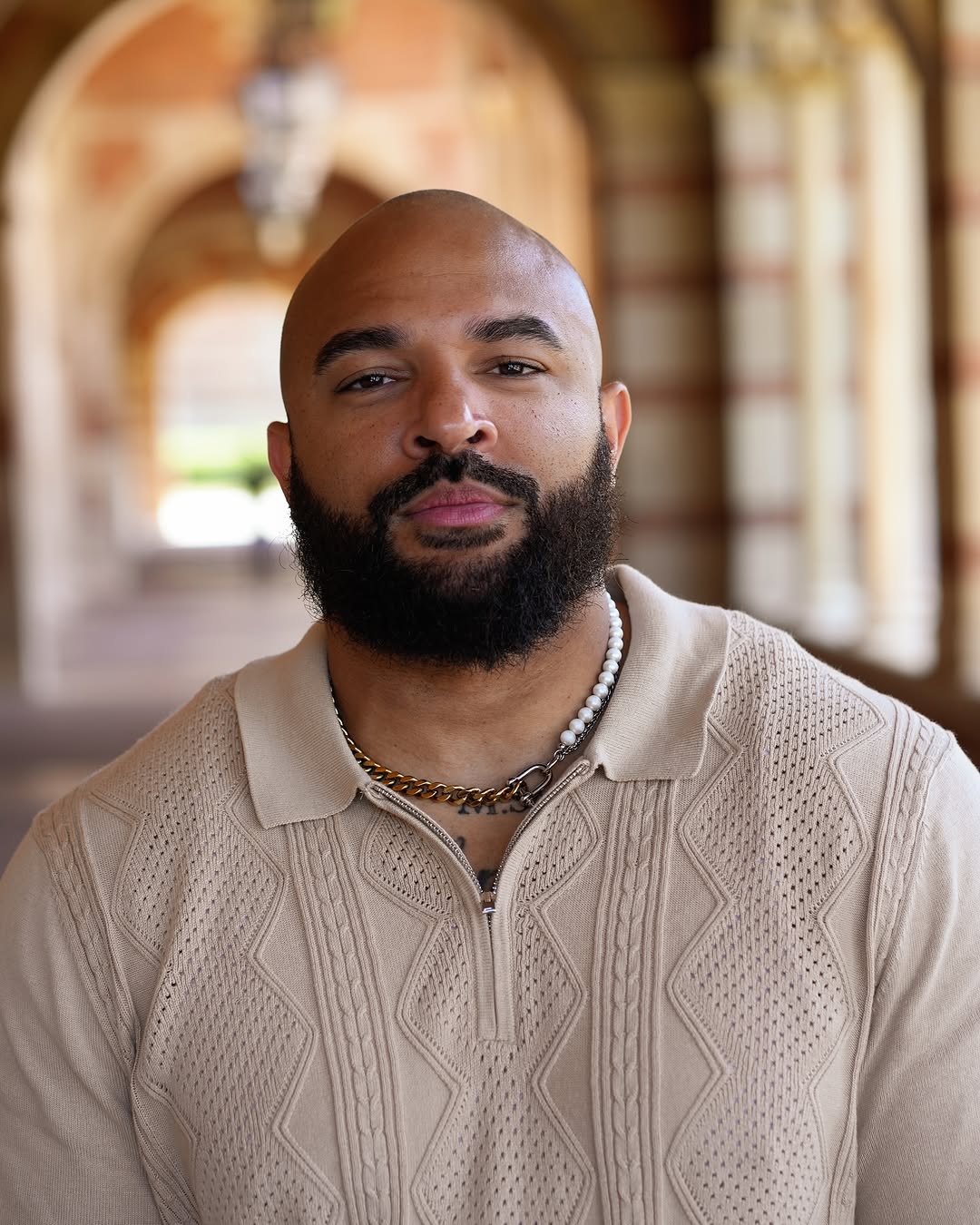
Dr. Starkid is the science communication project of Dakotah Tyler, a credentialed PhD astrophysicist based in the United States who has built a multi-platform following across TikTok, Instagram, and YouTube. Rather than restricting content to a single discipline, Tyler ranges freely across astrophysics, evolutionary biology, paleontology, and physics, a breadth that reflects a genuine cross-domain curiosity and distinguishes the channel from narrower STEM accounts. The format tends toward short, high-density explainers and reactive content — including stitches and conversation-style videos — that make complex ideas accessible without sacrificing scientific rigor. A companion podcast extends the brand into longer-form territory, and an authored book further cements Tyler's positioning as a multi-format science educator.
The audience skews heavily male and concentrates in the 25–34 demographic, a segment with sustained appetite for intellectually substantive content, which helps explain engagement rates that run well above category norms. Geographic reach is predominantly English-speaking — the United States, Canada, the United Kingdom, and Australia — giving the channel strong appeal for brands targeting educated, curious consumers in those markets. Without a heavy reliance on viral trends, the account's consistent growth and unusually high engagement suggest a loyal, returning audience rather than a passive one. As science communication continues to attract mainstream brand interest in categories like EdTech, publishing, and consumer electronics, Dr. Starkid is well-positioned to expand both its audience and its commercial footprint.
Dr.Starkid reaches an audience concentrated in United States primarily through YouTube, and is best activated via Instagram Reels and Stories, TikTok branded content. As an education creator they map naturally to brands targeting that space. With no brand deals logged yet, they read as an available, category-aligned partner for advertisers building early presence in the space. Engagement on YouTube runs around 8.5%, which points to an audience better suited to category-relevant, mid-funnel campaigns than to pure-reach buys. The channel's mix of Instagram Reels and Stories and TikTok branded content lets a sponsor choose between short awareness placements and longer, more detailed integrations. Because the audience follows education content rather than arriving through untargeted reach, sponsorships that match the channel's subject matter tend to convert more efficiently than broad placements. A consistent, on-topic posting focus gives sponsors a predictable, brand-safe environment, lowering placement risk compared with broad, general-interest channels. Campaigns here are best measured on qualified engagement and consideration within the niche rather than on raw impression volume. For United States-focused brands in education and related categories, Dr.Starkid offers a defined, creative-fit audience rather than broad, low-intent impressions.
Benchmark estimates for a creator at Dr.Starkid's tier (Mid, 565K combined followers, United States). Pulled from CreatorDB's category benchmarks.
The CreatorDB Agency runs end-to-end influencer campaigns globally — shortlisting, outreach, contracting, and performance reporting. Talk to our team about building a campaign around creators in this niche.
Yes — Dr. Starkid holds a genuine PhD in Astrophysics, making the channel one of the few science accounts on TikTok and Instagram run by a credentialed expert in the field. The academic background is central to the brand, not just a persona, and it shapes how complex topics like relativity and cosmology are explained.
Dr. Starkid's real name is Dakotah Tyler, which appears in the public business contact email listed directly in their creator bio. The "Dr. Starkid" handle is the science-content persona built around their astrophysics credentials.
The Dr. Starkid podcast is hosted by Dakotah Tyler and covers science in the same wide-ranging style as the short-form content — including astrophysics, physics, biology, and natural history. It extends the PhD-grounded approach to a longer-form audio format for listeners who want more depth than a 60-second clip allows.
Yes — Dakotah Tyler is listed as an Author alongside their roles as science creator and podcast host, making books part of a deliberate multi-format science communication strategy. The writing work sits alongside the social content and podcast as a way to reach audiences who prefer reading over video.
Dr. Starkid takes a broad science-communication approach, treating astrophysics, biology, evolution, dinosaurs, and paleontology as connected threads in the same story of how the universe and life developed. The content style is driven by scientific curiosity across disciplines rather than staying narrowly inside one field.
Yes — Dr. Starkid has posted content exploring how deep emotions in animals predate human cognition by millions of years, framing feelings as an evolutionary inheritance shared across species. This evolutionary-biology angle is a recurring part of the content mix, sitting alongside the space and physics topics.
Yes, Dr. Starkid has posted content addressing how any coordinate system is always defined relative to something else — a foundational concept in physics and astrophysics. This kind of precise, PhD-level nuance delivered in short-form video is a signature part of the content style that separates it from simpler pop-science accounts.
Yes — Dr. Starkid's engagement on both Instagram and TikTok runs well above the science-content category average, which is unusual for accounts in the Mid tier. High engagement in a niche like astrophysics typically signals an audience that is actively learning and discussing rather than passively scrolling.
Dr. Starkid is most active on TikTok and Instagram, posting on both platforms with a notably consistent cadence. YouTube is listed as the primary platform on the channel profile, suggesting longer-form content lives there while short-form drives the bulk of daily audience interaction.
The audience is predominantly male and concentrated in the mid-twenties to mid-thirties age range — viewers who want accurate, credentialed science explanations rather than oversimplified entertainment. The United States makes up the majority of the audience, with strong secondary reach in Canada, the UK, and Australia.
Stats (followers, engagement, audience demographics, growth) are pulled live from the CreatorDB API covering YouTube, Instagram and TikTok. Bio and FAQ content is AI-assisted; news items are sourced from cited public press at generation time. Read the full methodology →
If you'd like to update, correct, or remove this profile, get in touch and we'll handle it within 5 business days. We don't publish private data — every stat shown comes from your public platform profiles.
@dr.starkid · YouTube
+0 new followers
Preparing fresh data…
This usually takes 15–25 seconds.