United States
Dr. Chris Palmer is a Harvard Medical School psychiatrist, researcher, and author whose work sits at the intersection of metabolic health and psychiatric medicine.
Total Followers +2.2%
148K
Across YouTube, Instagram
Primary Platform
YouTube
14K followers · 10% of audience
Engagement
7.9%
vs. 1.5% category median
Sponsorship Tier
Mid
Est. $2.7K–$6.7K / IG post
Palmer founded MH² (mh2.health) to treat patients at the intersection of mental and metabolic health. By its one-year mark the clinic had seen over 200 patients from 31 states and 5 countries, including cases of treatment-resistant depression, schizophrenia, and autism.
The piece highlights growing clinical evidence — including Palmer's work — that some patients with psychotic disorders show marked improvement on ketogenic diets, and outlines next-step neuroimaging research underway at McLean.
Palmer and colleagues published "The Ketogenic Diet as a Transdiagnostic Treatment for Neuropsychiatric Disorders: Mechanisms and Clinical Outcomes" in Current Treatment Options in Psychiatry (Vol. 12, 2025).
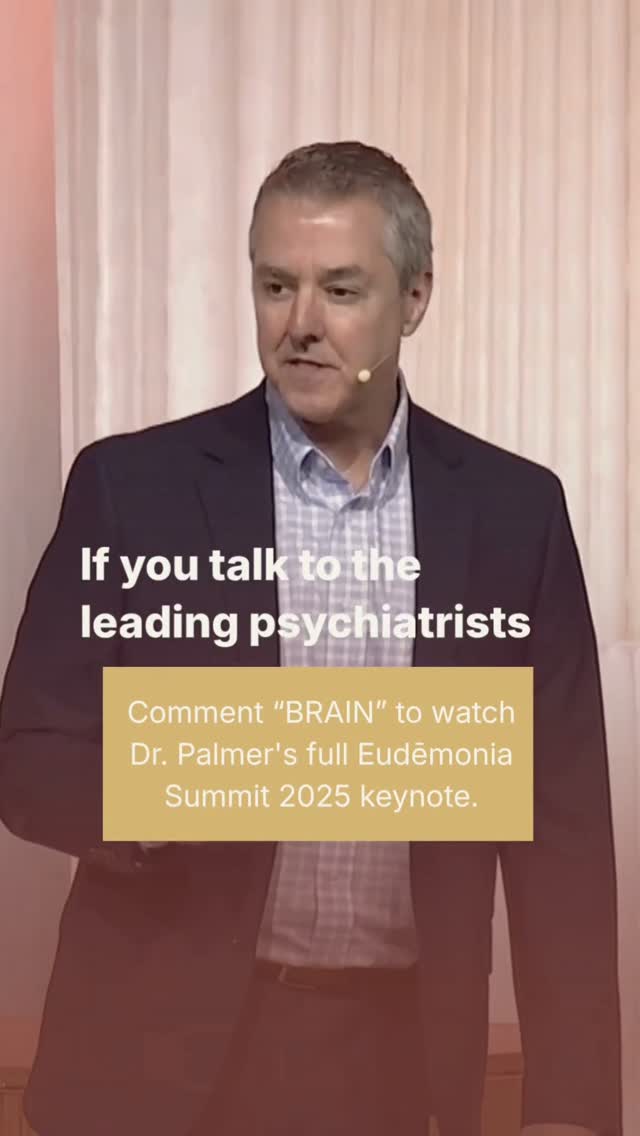
Palmer delivered full testimony before Senator Ron Johnson's roundtable in Washington D.C. (Sept. 23, 2024), arguing for a paradigm shift toward metabolic science in federal mental health policy.
| Window | YouTube | Combined | ||
|---|---|---|---|---|
| Last 7 days | +101 +0.7% | +173 +0.1% | +0 +0.0% | +274 |
| Last 30 days | +412 +2.9% | +3K +2.1% | +0 +0.0% | +3K |
| Last 90 days | +1K +7.5% | +4K +2.9% | +0 +0.0% | +5K |
| Last 365 days | +1K +7.5% | +4K +2.9% | +0 +0.0% | +5K |
Daily follower snapshots from CreatorDB's longitudinal index.
Dr. Chris Palmer is a Harvard Medical School psychiatrist, researcher, and author whose work sits at the intersection of metabolic health and psychiatric medicine. He gained significant mainstream attention with his 2022 book Brain Energy, which argues that mental illnesses including depression, bipolar disorder, schizophrenia, and anxiety disorders are fundamentally metabolic conditions — a framework that challenges conventional psychiatric models and has sparked serious debate within clinical and research communities. Palmer's own story is part of his public identity: he has spoken openly about beginning a ketogenic diet to address his own metabolic syndrome and experiencing what he describes as substantial improvements in his mental health, giving his content an authenticity that purely academic communicators often lack. His Senate roundtable testimony in Washington in September 2024 signaled his growing influence in policy-adjacent conversations around mental health treatment.
Palmer's content across YouTube and Instagram skews toward evidence-based explainers — covering topics like nutritional psychiatry, autism diagnosis trends, and the psychiatric implications of conditions like B12 deficiency — pitched at an audience that leans heavily male and younger adult, suggesting strong crossover appeal with the biohacking, metabolic health, and functional medicine communities. His engagement rate substantially outperforms category norms, indicating that his audience is genuinely invested rather than passively following. The absence of consumer brand sponsorships in the available data is itself telling: his positioning aligns more naturally with academic credibility than with supplement or wellness product endorsements, though that could evolve as metabolic health becomes a larger commercial category. As institutional psychiatry faces growing public skepticism, Palmer's Harvard affiliation combined with heterodox metabolic framing gives him a distinctive and durable niche at the credible edge of alternative mental health discourse.
Chrispalmermd reaches an audience concentrated in United States primarily through YouTube, and is best activated via long-form YouTube integrations, Instagram Reels and Stories. As a health creator they map naturally to brands targeting that space. With no brand deals logged yet, they read as an available, category-aligned partner for advertisers building early presence in the space. Engagement on YouTube runs around 7.9%, which points to an audience better suited to category-relevant, mid-funnel campaigns than to pure-reach buys. The channel's mix of long-form YouTube integrations and Instagram Reels and Stories lets a sponsor choose between short awareness placements and longer, more detailed integrations. Because the audience follows health content rather than arriving through untargeted reach, sponsorships that match the channel's subject matter tend to convert more efficiently than broad placements. A consistent, on-topic posting focus gives sponsors a predictable, brand-safe environment, lowering placement risk compared with broad, general-interest channels. Campaigns here are best measured on qualified engagement and consideration within the niche rather than on raw impression volume. For United States-focused brands in health and related categories, Chrispalmermd offers a defined, creative-fit audience rather than broad, low-intent impressions.
Benchmark estimates for a creator at Chrispalmermd's tier (Mid, 148K combined followers, United States). Pulled from CreatorDB's category benchmarks.
The CreatorDB Agency runs end-to-end influencer campaigns globally — shortlisting, outreach, contracting, and performance reporting. Talk to our team about building a campaign around creators in this niche.
Brain Energy lays out Dr. Palmer's argument that mental illnesses — including depression, bipolar disorder, and schizophrenia — are fundamentally metabolic and mitochondrial disorders of the brain rather than simple neurotransmitter imbalances. The book presents a unified theory of why psychiatric conditions develop and makes the case that metabolic interventions, including dietary changes, can play a meaningful role in treatment. It is the central text behind what Palmer calls the metabolic theory of mental illness.
Yes. In September 2024, Dr. Palmer delivered full testimony at a Senate Roundtable in Washington D.C., advocating for recognition of the link between metabolic health and mental illness at a federal policy level. The complete testimony was posted to his YouTube channel and represents one of the highest-profile moments in his public advocacy work. It signals how seriously his research is being taken outside of academic circles.
Dr. Palmer's metabolic theory holds that psychiatric conditions share a common root in disrupted energy metabolism and mitochondrial dysfunction in the brain. Rather than focusing exclusively on neurotransmitters like serotonin or dopamine, the theory implicates diet, sleep, exercise, and metabolic health as direct drivers of mental illness. This framework is the foundation of his book Brain Energy and the core of his research and clinical practice at Harvard.
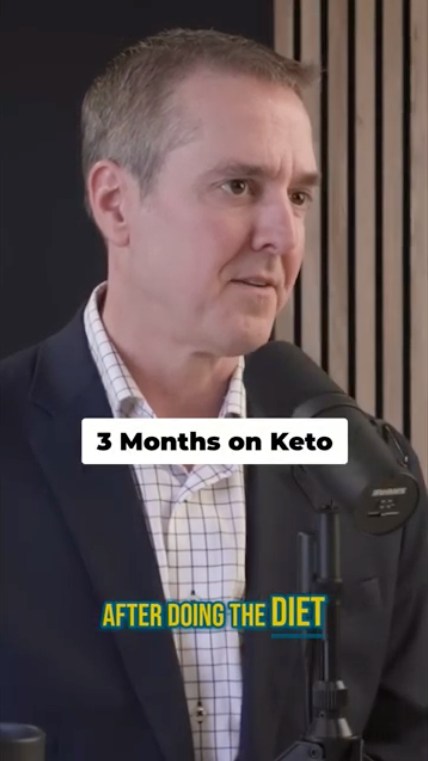
Dr. Palmer is one of the most prominent medical voices arguing that the ketogenic diet has real therapeutic potential for psychiatric conditions, particularly treatment-resistant cases. His position is grounded in the idea that ketosis may support mitochondrial function and reduce the neuroinflammation associated with disorders like depression and bipolar disorder. He pairs this clinical argument with his own personal experience using keto, which gives his advocacy an unusual degree of firsthand credibility.
Yes. Dr. Palmer has publicly shared that he originally adopted a ketogenic diet to address his own metabolic syndrome — with no expectation of any psychiatric benefit. He noticed significant improvements in his mental health as a result, and that personal experience became a catalyst for his deeper research into the metabolism-mental health connection. This self-experimentation story is a recurring theme in his content and public talks.
Autism spectrum disorder is a major content pillar for Dr. Palmer because he views it through his metabolic framework, arguing that mitochondrial and metabolic dysfunction may be contributing factors in ASD. He frequently highlights the dramatic rise in autism diagnoses — from roughly 1 in 150 children in 2000 to far higher rates today — as evidence that environmental and metabolic influences deserve serious scientific attention. His content bridges mainstream psychiatry and emerging nutritional neuroscience on this topic.
Dr. Palmer has argued that B12 deficiency is widely misunderstood as a fatigue problem when it can actually produce serious psychiatric symptoms including depression, psychosis, and cognitive decline. His view is that clinicians should routinely screen for nutritional deficiencies as part of a thorough psychiatric evaluation, not just order standard blood panels. This point fits into his broader argument that metabolic and nutritional factors are systematically underweighted in modern psychiatry.
Dr. Palmer has outlined multiple pathways by which diet influences mental health, including nutrient deficiencies, blood sugar dysregulation, gut-brain signaling, inflammation, and mitochondrial energy production. He argues that these are not fringe or alternative-medicine ideas but mechanisms supported by growing peer-reviewed evidence. His content — including posts like his breakdown of six dietary effects on mental health — aims to translate that science into practical understanding for a general audience.
Dr. Chris Palmer is a psychiatrist, researcher, and educator at Harvard Medical School, one of the most prestigious medical institutions in the world. He works at the intersection of metabolism and mental health, conducting research, training clinicians, and seeing patients. His Harvard affiliation is a central part of his credibility as a leading voice in the emerging field of metabolic psychiatry.
Dr. Palmer is most active on YouTube and Instagram, where he reaches a combined audience well into the hundreds of thousands. His YouTube channel features longer-form content including lectures, research discussions, and his full Senate testimony, while Instagram carries shorter educational clips and commentary on psychiatric and metabolic health topics. Both platforms skew heavily toward an adult male audience, with strong viewership in the United States, India, Canada, and the United Kingdom.
Stats (followers, engagement, audience demographics, growth) are pulled live from the CreatorDB API covering YouTube, Instagram and TikTok. Bio and FAQ content is AI-assisted; news items are sourced from cited public press at generation time. Read the full methodology →
If you'd like to update, correct, or remove this profile, get in touch and we'll handle it within 5 business days. We don't publish private data — every stat shown comes from your public platform profiles.
@chrispalmermd · YouTube
+0 new followers
Preparing fresh data…
This usually takes 15–25 seconds.