United States
Atlas Obscura is a New York-based media brand founded in 2009 by Joshua Foer and Dylan Thuras, built around the premise that the world is far stranger and more wondrous than conventional travel guides suggest.
Total Followers +0.7%
744K
Across YouTube, Instagram, TikTok
Primary Platform
YouTube
146K followers · 20% of audience
Engagement
4.4%
vs. 1.5% category median
Sponsorship Tier
Mid
Est. $8.5K–$20K / IG post
| Window | YouTube | TikTok | Combined | |
|---|---|---|---|---|
| Last 7 days | +0 +0.0% | +284 +0.1% | +101 +0.3% | +385 |
| Last 30 days | +0 +0.0% | +1K +0.3% | +4K +13.3% | +6K |
| Last 90 days | +0 +0.0% | +6K +1.1% | +8K +25.2% | +14K |
| Last 365 days | +0 +0.0% | +6K +1.1% | +8K +25.2% | +14K |
Daily follower snapshots from CreatorDB's longitudinal index.
Atlas Obscura is a New York-based media brand founded in 2009 by Joshua Foer and Dylan Thuras, built around the premise that the world is far stranger and more wondrous than conventional travel guides suggest. What began as a crowdsourced online database of unusual places — hidden grottos, curiosity museums, forgotten infrastructure — grew into a full editorial operation producing documentary-style video, longform articles, and the 2016 book 'Atlas Obscura: An Explorer's Guide to the World's Hidden Wonders.' Their YouTube channel and social presence translate that editorial DNA into short-form and mid-length video, covering topics ranging from rare anatomical collections at institutions like the New York Academy of Medicine to sourdough libraries in Belgium and megaphone sculptures in Estonian forests.
Across platforms, Atlas Obscura commands a predominantly English-speaking, US-anchored audience that skews older than typical travel creators — a meaningful portion of followers fall into the 45-and-above bracket, reflecting the brand's appeal to intellectually curious adults rather than aspirational lifestyle travelers. Their engagement rate on YouTube runs well above category median, signaling genuine interest in niche educational content rather than passive scrolling. A dedicated food-focused sub-brand, Gastro Obscura, handles culinary storytelling separately, broadening the overall brand's sponsorship surface. For advertisers in the publishing, museum, heritage tourism, or cultural travel space, Atlas Obscura occupies an unusually credible editorial position that is difficult to replicate through conventional influencer channels.
Atlasobscura reaches an audience concentrated in United States primarily through YouTube, and is best activated via long-form YouTube integrations, Instagram Reels and Stories, TikTok branded content. As a travel creator they map naturally to brands targeting that space. With no brand deals logged yet, they read as an available, category-aligned partner for advertisers building early presence in the space. Engagement on YouTube runs around 4.4%, which points to an audience better suited to category-relevant, mid-funnel campaigns than to pure-reach buys. The channel's mix of long-form YouTube integrations and Instagram Reels and Stories lets a sponsor choose between short awareness placements and longer, more detailed integrations. Because the audience follows travel content rather than arriving through untargeted reach, sponsorships that match the channel's subject matter tend to convert more efficiently than broad placements. A consistent, on-topic posting focus gives sponsors a predictable, brand-safe environment, lowering placement risk compared with broad, general-interest channels. Campaigns here are best measured on qualified engagement and consideration within the niche rather than on raw impression volume. For United States-focused brands in travel and related categories, Atlasobscura offers a defined, creative-fit audience rather than broad, low-intent impressions.
Benchmark estimates for a creator at Atlasobscura's tier (Mid, 744K combined followers, United States). Pulled from CreatorDB's category benchmarks.
The CreatorDB Agency runs end-to-end influencer campaigns globally — shortlisting, outreach, contracting, and performance reporting. Talk to our team about building a campaign around creators in this niche.
Atlas Obscura is primarily a media brand and community-sourced website that catalogs the world's hidden, strange, and wondrous places — the YouTube channel and social accounts are extensions of that larger platform. The website hosts a vast, user-contributed database of unusual destinations, making it far more than a single social media presence.
Atlas Obscura was co-founded by Joshua Foer — the author of Moonwalking with Einstein — and Dylan Thuras, who launched the platform around 2009 with a mission to document the planet's most unusual and overlooked places. Their community-driven model turned what began as a passion project into one of the internet's best-known guides to hidden wonders.
Yes — Atlas Obscura published Atlas Obscura: An Explorer's Guide to the World's Hidden Wonders, which curates hundreds of the most extraordinary places from their global community database. It became a bestseller after its 2016 release and has served as a physical companion to the digital platform ever since.
Yes — the Atlas Obscura database is largely community-sourced, meaning anyone can submit an unusual or hidden place for potential inclusion on their website. That open, explorer-community model is central to how the brand has built one of the world's most comprehensive guides to the bizarre and beautiful.
The Sourdough Library, located in Saint-Vith, Belgium, houses hundreds of living sourdough starter cultures collected from bakers around the world — essentially a preservation vault for global fermentation history. Atlas Obscura highlighted it as exactly the kind of quietly extraordinary institution that exists far outside mainstream awareness.
The giant wooden megaphones in an Estonian forest are a sound art installation designed to amplify the ambient sounds of the surrounding woodland, letting visitors hear the forest in striking, immersive detail. Atlas Obscura featured them as one of the more quietly surreal sensory experiences that exist well off any conventional tourist trail.
The world's largest egg is a subfossil elephant bird egg from the now-extinct Aepyornis of Madagascar, which can exceed a foot in length and dwarfs even an ostrich egg by comparison. Because these eggs are ancient artifacts — often hundreds to thousands of years old — they are preserved in museum and private collections rather than consumed, which is why Atlas Obscura noted you can't eat one.
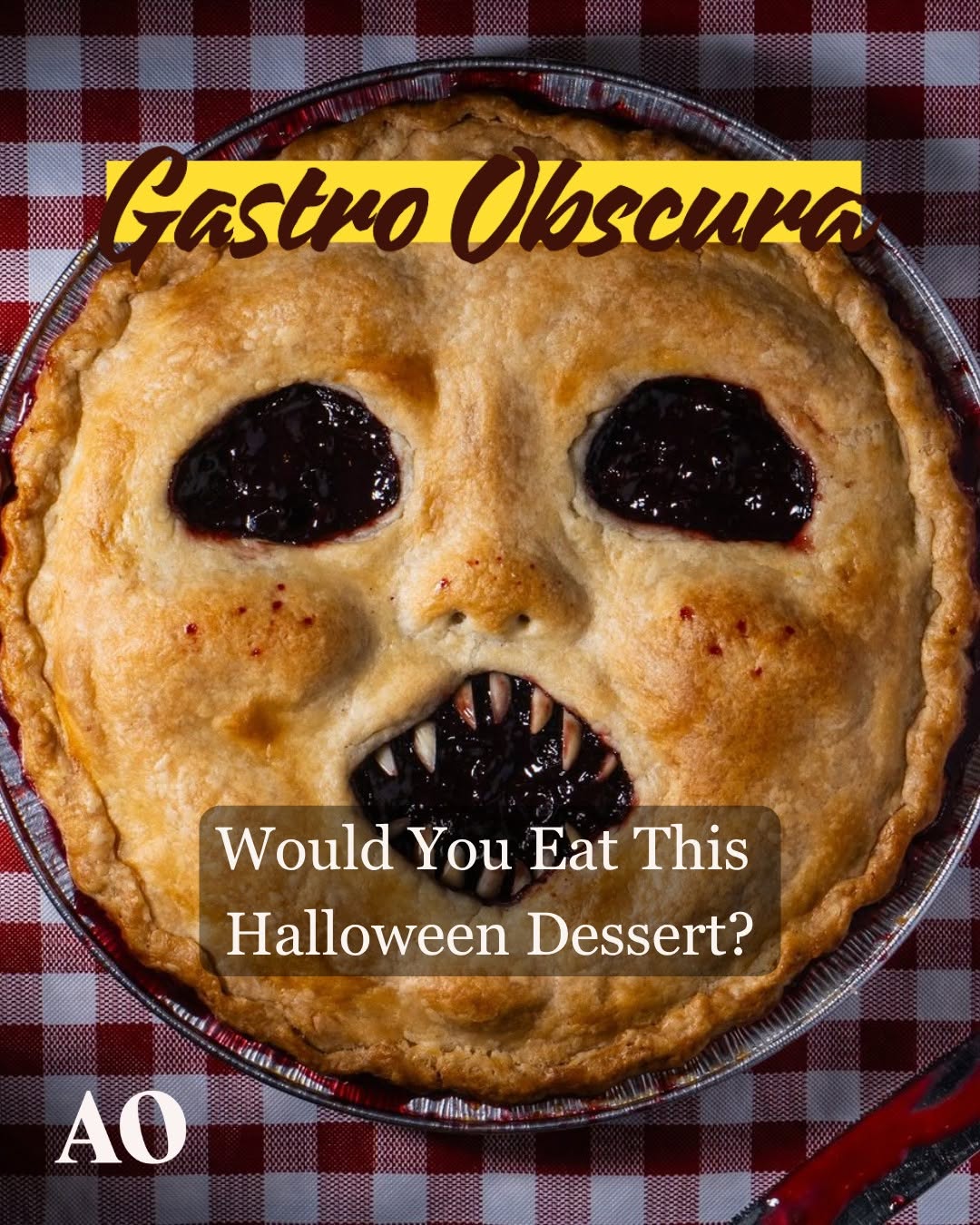
@gastroobscura is Atlas Obscura's dedicated food-focused offshoot, exploring curious culinary traditions, forgotten recipes, and unusual food cultures from around the world. It carries the same spirit of wonder and discovery as the main brand but channels it entirely through the lens of gastronomy.
America Obscura is Atlas Obscura's content series dedicated to uncovering the strange, overlooked, and surprising places hidden across the United States. It applies the brand's signature approach — celebrating the hidden and unusual — specifically to American destinations that rarely appear on mainstream travel lists.
Yes — Atlas Obscura has operated a travel arm that organizes guided trips to genuinely unusual destinations around the world, built around the same philosophy as the brand itself. These aren't conventional package tours; they're designed around the kind of off-the-beaten-path places that appear in their explorer community database.
Stats (followers, engagement, audience demographics, growth) are pulled live from the CreatorDB API covering YouTube, Instagram and TikTok. Bio and FAQ content is AI-assisted; news items are sourced from cited public press at generation time. Read the full methodology →
If you'd like to update, correct, or remove this profile, get in touch and we'll handle it within 5 business days. We don't publish private data — every stat shown comes from your public platform profiles.
@atlasobscura · YouTube
+0 new followers
Preparing fresh data…
This usually takes 15–25 seconds.