Track 6 influencer marketing trends reshaping e-commerce in 2026—from micro-influencers to live shopping and AI-driven strategies for maximum ROI.
In recent years, influencer marketing has become one of the most popular trends in the e-commerce industry. As we slowly transition into the post-Covid era, and social media continues to dominate our daily lives, brands are increasingly turning to influencers to help them reach their target audience and drive sales.
With the rise of new platforms and technologies, the way that brands and influencers collaborate is evolving. It’s important for e-commerce businesses to keep up with the latest trends and best practices.
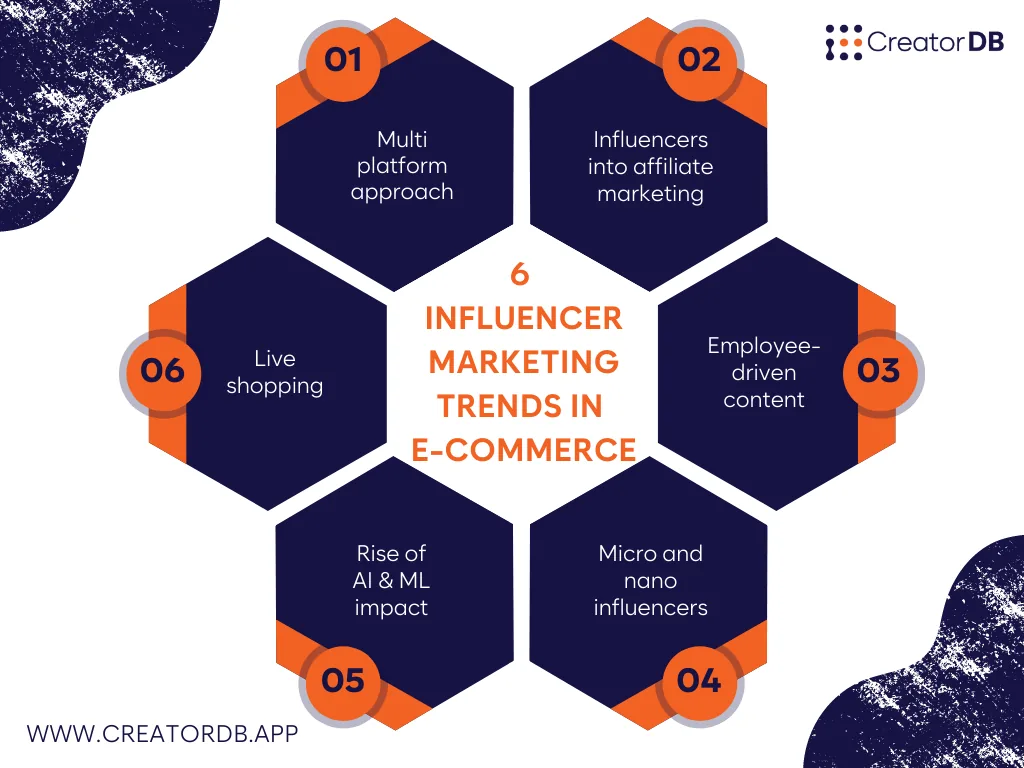
In this blog post, we’ll explore the current state of influencer marketing in e-commerce and highlight 6 key trends that are shaping the industry. Whether you’re an established e-commerce brand or just starting out, understanding the power of influencer marketing can help take your business to the next level.
One of the key trends in influencer marketing is that consumers are following their favorite creators across multiple platforms, not just one.
According to HubSpot, 72% of Gen Z and Millennials follow social media influencers. Gen Z prefers a unique voice, regardless of which platform they use (though they are mostly on TikTok).
Read more:
The Ultimate Guide to Gen Z Marketing
Meaning that e-commerce brands need to diversify their influencer campaigns and work with influencers who have a strong presence on different channels, such as Instagram, YouTube, TikTok, Facebook, and Twitter. Working with multi-platform influencers can help e-commerce brands reach more potential customers and increase their exposure.
For instance, an influencer with a large following on Instagram can create YouTube videos or TikTok clips featuring the brand’s products, which can drive more traffic and conversions to the brand’s website.
Also, collaborating with multi-platform influencers can enable e-commerce brands to build trust and credibility with their target audience. Consumers tend to trust influencers who share authentic and consistent content across different channels.
Therefore, e-commerce brands should seek out influencers who align with their brand values and voice, and who can create engaging content that highlights their products or services in a natural way.
Affiliate marketing is another trend that e-commerce brands should pay attention to.
Affiliate marketing is a type of performance-based marketing where an e-commerce brand pays a commission to an affiliate (in this case, an influencer) for each sale or action generated by their referral link.
Affiliate marketing can be a win-win situation for both e-commerce brands and influencers.
Read more:
The Real Value Of Influencer Collaborations? Think Long Term.
However, affiliate marketing requires careful planning and execution from both parties. E-commerce brands need to choose the right influencers who have relevant audiences for their products or services. They also need to provide clear guidelines and expectations for the influencers regarding how they should disclose their affiliation and track their performance.
Influencers need to follow the best practices of affiliate marketing such as disclosing their relationship with the brand clearly, providing honest reviews and recommendations, using catchy call-to-actions, and optimizing their links for mobile devices.
To leverage employee-driven content effectively, e-commerce brands need to create a culture of empowerment and appreciation among their employees. They also need to provide training and guidance on how to create engaging content that complies with ethical standards and regulations.
Micro and nano influencers are taking the marketing world by storm, and it’s a trend that’s expected to continue well into 2023. There are several reasons for this rise in popularity:
Read more:
Plan Your Campaign With Micro-Influencers
Overall, it’s clear that micro and nano influencers are here to stay and that businesses would be wise to incorporate them into their marketing strategies.
The use of artificial intelligence (AI) and machine learning (ML) is rapidly growing in the influencer marketing industry. With the vast amount of data available through social media and other online platforms, AI/ML technology can help brands and marketers analyze data more efficiently and effectively.
This includes identifying the most relevant influencers for a specific campaign, predicting their engagement rates and potential reach, and even suggesting content ideas that are more likely to resonate with their audience.
Learn more:
CreatorDB’s AI data-driven approach to identifying influencers for your business
Additionally, AI/ML can help automate the process of influencer selection, negotiation, and campaign optimization, freeing up time for marketers to focus on other tasks. As technology continues to improve, we can expect AI/ML to play an even greater role in the influencer marketing industry, providing more precise targeting and higher ROI for brands.
Influencer marketing and live shopping are currently trending in e-commerce. This is because they can help attract and retain customers, increase brand awareness and trust, and boost sales and profitability. The following are five key points regarding this trend:
Authenticity: Influencer marketing allows brands to leverage the authenticity and trust that social media personalities have built with their followers, leading to more genuine and credible brand endorsements.
Engaging content: Influencers are skilled at creating engaging and relatable content that resonates with their followers. This can help brands to capture the attention of their target audience and generate buzz around their products or services.
Targeted reach: Influencer marketing can help brands to reach their target audience more effectively by leveraging the influence of influencers who have a similar target audience.
Interactive shopping experience: Live shopping provides customers with a more immersive and interactive shopping experience, allowing them to ask questions, interact with hosts and other viewers, and get real-time feedback.
Increased sales: Both influencer marketing and live shopping have been shown to drive sales and increase revenue for brands. By combining these two strategies, brands can create even more impactful campaigns that generate results.
Work with CreatorDB
Talk to our Asia agency team about applying these ideas to a real creator campaign — or open the CreatorDB app and start building your shortlist now.
Consumers follow their favorite creators across Instagram, YouTube, TikTok, and other channels, not just one platform. Multi-platform influencers help e-commerce brands reach more potential customers and build trust through consistent, authentic content. An influencer with strong Instagram presence can create YouTube videos or TikTok clips featuring your products, driving more traffic and conversions to your website.
Affiliate marketing is performance-based: brands pay influencers commission only for sales or actions generated through referral links. This reduces upfront costs and improves ROI compared to traditional paid campaigns. Influencers benefit by monetizing content and earning passive income, creating a win-win structure when both parties plan carefully and choose aligned partners.
Influencers must clearly disclose their relationship with the brand and provide honest reviews. Best practices include clear affiliation statements, genuine recommendations, catchy call-to-actions, and mobile-optimized links. Transparent disclosure builds audience trust and ensures compliance with ethical standards and regulations governing sponsored content.
Micro and nano influencers have more engaged and loyal followings, making their recommendations more trusted. They maintain stronger personal connections with audiences, appearing more relatable and authentic than mega-influencers. Their ability to target specific niches allows e-commerce brands to reach relevant, high-intent customers efficiently.
Choose influencers whose audience demographics and values align with your brand and products. Brands must vet creators who share authentic, consistent content and have proven performance in your product category. Prioritize creators who can create natural-looking sponsored content and have demonstrated success converting their followers into customers.