United States
What If is a science-focused hypothetical exploration show produced by Underknown, a digital media studio, and hosted by Peter. Built around a deceptively…
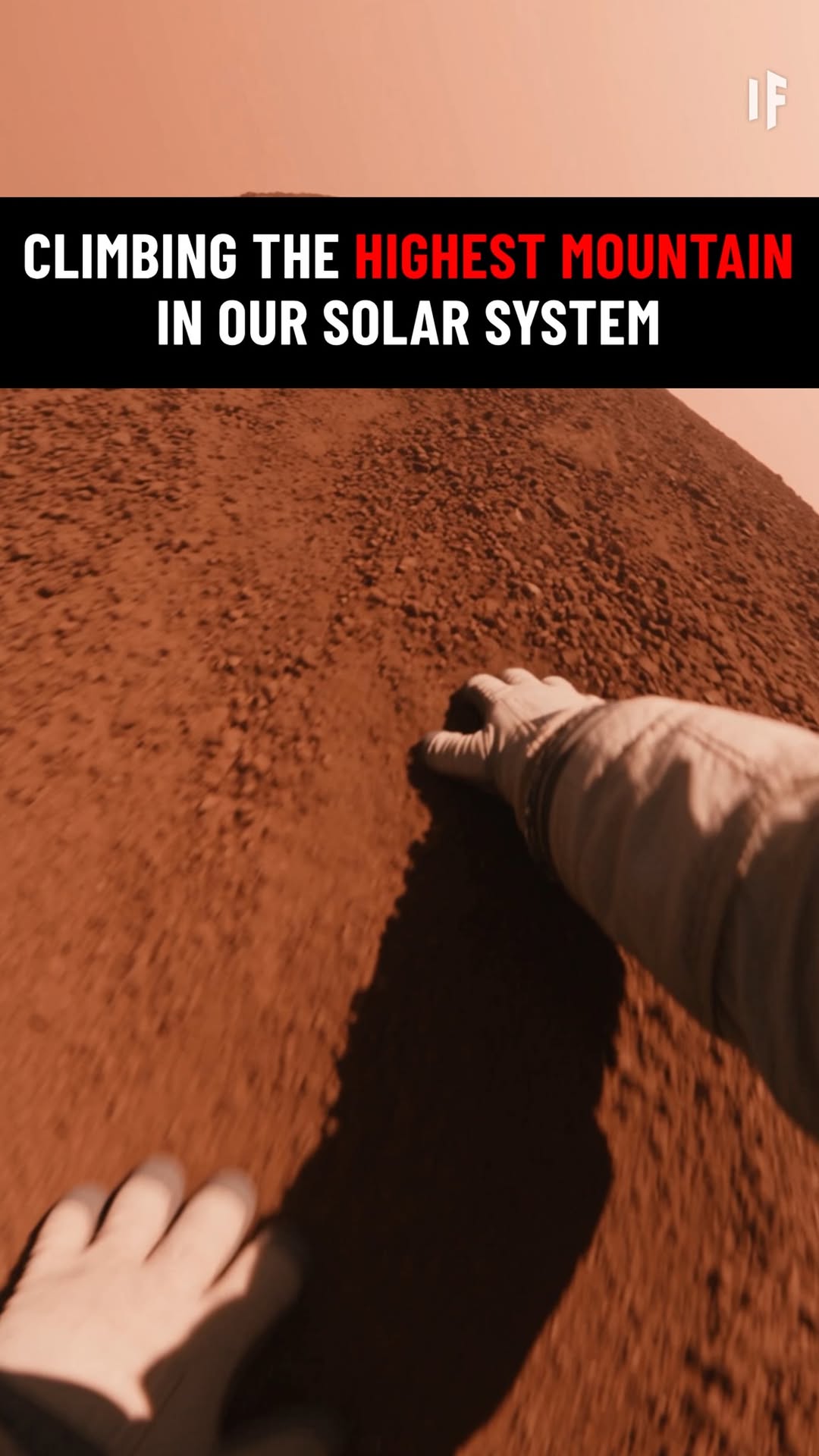
Total Followers +0.1%
11.8M
Across YouTube, Instagram, TikTok
Primary Platform
YouTube
8.9M followers · 75% of audience
Engagement
3.8%
vs. 1.5% category median
Sponsorship Tier
Mega
Est. $9.2K–$21K / IG post
Parent company Underknown extended the Popular Science streaming channel to Roku Canada, with What If anchoring the schedule alongside How to Survive and Aperture.
Underknown partnered with Popular Science to launch a FAST channel on Vizio WatchFree+, Sling Freestream, FUBO, and Plex, with 130+ hours of What If content featured prominently. Covered exclusively by Variety.
| Window | YouTube | TikTok | Combined | |
|---|---|---|---|---|
| Last 7 days | +0 +0.0% | -368 -0.1% | +0 +0.0% | -368 |
| Last 30 days | +10K +0.1% | -1595 -0.3% | +0 +0.0% | +8K |
| Last 90 days | +70K +0.8% | -6563 -1.1% | +0 +0.0% | +63K |
| Last 365 days | +70K +0.8% | -6563 -1.1% | +0 +0.0% | +63K |
Daily follower snapshots from CreatorDB's longitudinal index.
| Brand | Type | Platform | Date | Performance vs. baseline |
|---|---|---|---|---|
| Abacus.AI Sponsorship | Sponsored content | YouTube | Apr 2026 | — |
| Incogni Inc. Sponsorship | Sponsored content | YouTube | Jan 2026 | — |
| S.C. CyberGhost S.A. Sponsorship | Sponsored content | YouTube | Dec 2025 | — |
| CleanCore Solutions Sponsorship | Sponsored content | YouTube | Nov 2025 | — |
| Ground News Sponsorship | Sponsored content | YouTube | Oct 2025 | — |
What If is a science-focused hypothetical exploration show produced by Underknown, a digital media studio, and hosted by Peter. Built around a deceptively simple premise — posing a single "what if" question and following real scientific theory to its logical conclusion — the show covers territory ranging from deep-space cosmology and Kardashev-scale civilizations to prehistoric Earth and near-future technology. Each episode functions as a self-contained thought experiment grounded in physics, biology, and astronomy, making complex scientific concepts accessible without sacrificing intellectual rigor. The format proved a strong fit for YouTube's long-form science audience, and the channel has grown into one of the more recognizable names in the science-education space, regularly drawing engagement rates well above the category median.
The audience skews heavily male and concentrates in the 25–34 and 18–24 brackets, with significant viewership in the United States, Taiwan, and the United Kingdom — a distribution that reflects both the show's English-language production and the global appetite for science content among younger, digitally native viewers. That demographic profile is clearly legible in the sponsor mix: privacy tools like Incogni and CyberGhost, AI platform Abacus.AI, and the media-literacy aggregator Ground News all signal an audience that is technically literate, skeptical of data exposure, and engaged with current events. TikTok clips repurposing episode highlights show notably strong engagement for the platform, suggesting the short-form format extends the show's reach beyond its core YouTube base. As AI and space exploration maintain cultural momentum, What If is well positioned to deepen partnerships with technology and science-adjacent brands seeking a credible, intellectually engaged audience.
What If reaches an audience concentrated in United States primarily through YouTube, and is best activated via long-form YouTube integrations, Instagram Reels and Stories, TikTok branded content. As an education creator they map naturally to brands targeting that space. Demonstrated partners include Abacus.AI and Incogni Inc.. Engagement on YouTube runs around 3.8%, pointing to an audience suited to category-relevant, mid-funnel brand campaigns rather than pure-reach buys.
Benchmark estimates for a creator at What If's tier (Mega, 11.8M combined followers, United States). Pulled from CreatorDB's category benchmarks.
The CreatorDB Agency runs end-to-end influencer campaigns globally — shortlisting, outreach, contracting, and performance reporting. Talk to our team about building a campaign around creators in this niche.
Peter is the on-screen host of the What If science show, guiding viewers through each episode's hypothetical scenario. He is named directly in the channel's own YouTube description, making him the face of the series, though the show itself is produced by the media company Underknown.
What If is produced by Underknown, a media company that specializes in science and educational content. The show credits @weareunderknown in its official Instagram bio and operates across platforms under the handle @whatifscienceshow.
A Type III civilization, drawn from the Kardashev scale, is one that can harness the energy of an entire galaxy. What If has produced episodes exploring what it would mean if Earth reached that level of development, applying real physics and astronomy to trace what that future might actually look like.
Yes — What If explicitly grounds each episode in established scientific theory, drawing from physics, biology, astronomy, and geology rather than pure speculation. The show follows real science to trace where each hypothetical scenario could plausibly lead, even when the starting premise is extreme or far-future.
The episode explores what would hypothetically happen if NASA's Voyager 1 probe, currently traveling through interstellar space, were to crash-land on an alien world. It applies real data about Voyager's trajectory and velocity to imagine the consequences of that collision, both for the probe and for any environment it might hit.
The episode walks through the hypothetical of detonating nuclear weapons on each planet, using real planetary science to work out what would actually happen in each case. It's one of the channel's more dramatic thought experiments, using an extreme premise to teach real physics and highlight how vastly different each planet's environment is.
What If regularly brings its hypothetical format down to Earth by exploring extreme real-world locations alongside its space content — Lake Natron, a highly caustic and calcifying lake in Tanzania, is exactly the kind of environment that generates compelling 'what if' questions rooted in real chemistry and biology. These Earth-based episodes broaden the show beyond deep space while keeping the same science-first approach.
The South Atlantic Anomaly is a region where Earth's magnetic field is significantly weaker than average, allowing increased radiation to reach lower altitudes — it's a real phenomenon tracked by NASA. What If has used it as a topic hashtag, fitting the show's pattern of applying scientific hypotheticals to real and little-known Earth science phenomena.
What If has worked with sponsors including Abacus.AI, Incogni, CyberGhost, Ground News, and CleanCore Solutions, all placed as YouTube integrations. The lineup leans heavily toward tech and privacy tools, which aligns well with the channel's science-interested, digitally engaged audience.
What If has surpassed eight million subscribers on YouTube, placing it firmly in the Mega tier of science and education channels, with additional followings of over two million on TikTok and several hundred thousand on Instagram. Full episodes live on YouTube, while short-form clips and highlights appear regularly on TikTok and Instagram under @whatifscienceshow.
Stats (followers, engagement, audience demographics, growth) are pulled live from the CreatorDB API covering YouTube, Instagram and TikTok. Bio and FAQ content is AI-assisted; news items are sourced from cited public press at generation time. Read the full methodology →
If you'd like to update, correct, or remove this profile, get in touch and we'll handle it within 5 business days. We don't publish private data — every stat shown comes from your public platform profiles.
@whatifscienceshow · YouTube
+0 new followers
Preparing fresh data…
This usually takes 15–25 seconds.