Last updated just now · Jun 25, 2026, 3:16 AM
Science & Education United States

Quanta Magazine

Full Creator Stats Live · Updated 2026-06-25

Quanta Magazine is a nonprofit science publication launched in 2012 and backed by the Simons Foundation, the philanthropic organization founded by…

NicheScience & Education TierMacro Engagement5.0%

Total Followers +0.1%

1.5M

Across YouTube, Instagram

Primary Platform

YouTube

1.2M followers · 81% of audience

Engagement

5.0%

vs. 1.5% category median

Sponsorship Tier

Macro

Est. $4.3K–$10K / IG post

Recent news · 4 items

Performance Across Platforms

Updated 2026-06-25
PlatformFollowers30d GrowthEngagementPosts / wkLast upload
YouTube 1,210,000 +0 5.0% 0.9 2 days ago
Instagram 285,020 +2K 2.3% 0.5 2 months ago

Growth Trend

Last 365 days
WindowYouTubeInstagramCombined
Last 7 days +0 +0.0% +485 +0.2% +0 +0.0% +485
Last 30 days +0 +0.0% +2K +0.6% +0 +0.0% +2K
Last 90 days +10K +0.8% +5K +1.6% +0 +0.0% +15K
Last 365 days +10K +0.8% +5K +1.6% +0 +0.0% +15K

Audience Demographics

Premium
Premium insight

See who's actually watching

Age, gender, country and language splits — for every creator in our index.

Start free trial

14-day free trial

146K441K735K1M1.3M Jun 27Sep 25Dec 25Mar 25Now
Click a platform to toggle · hover the dots for exact values

Daily follower snapshots from CreatorDB's longitudinal index.

Background

About Quanta Magazine

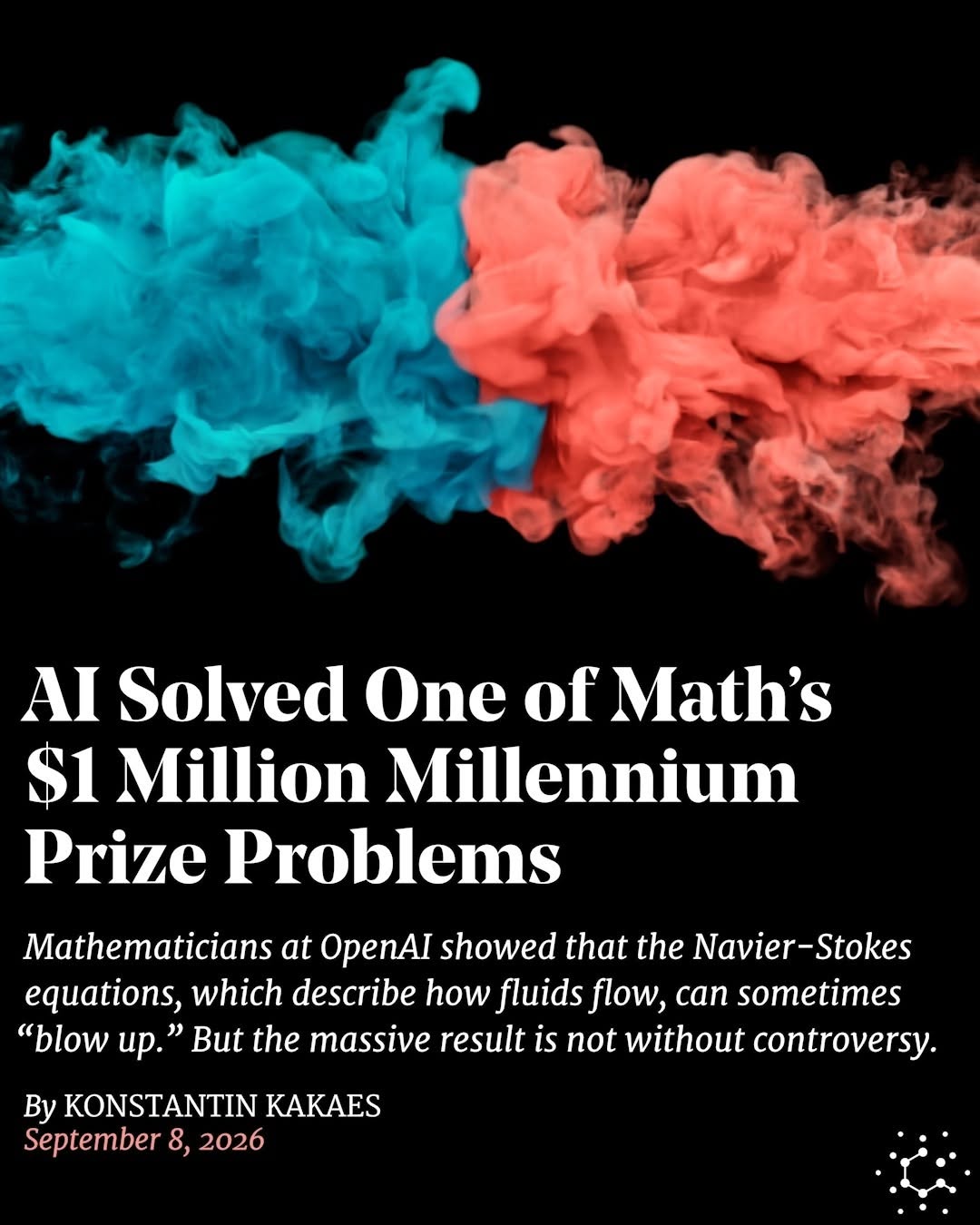
Quanta Magazine is a nonprofit science publication launched in 2012 and backed by the Simons Foundation, the philanthropic organization founded by mathematician and investor Jim Simons. Operating with editorial independence, Quanta has built a reputation for rigorous, deeply reported coverage of fundamental research in mathematics, physics, biology, and computer science — territory that most mainstream science outlets treat superficially or avoid altogether. The publication's YouTube channel, operating under the handle @quantasciencechannel, translates that editorial mission into animated explainers, researcher interviews, and annual breakthrough roundups that make frontier science legible without oversimplifying it. That credibility was formalized when Quanta received the 2022 Pulitzer Prize in Explanatory Reporting, a distinction rare for a digital-native science outlet and one that meaningfully separates it from the broader science-communication landscape on YouTube.
The channel's audience skews heavily male and concentrates in the 18-to-34 age band — a demographic consistent with undergraduate and early-career STEM professionals as well as dedicated science enthusiasts. Engagement runs well above the category median, suggesting strong viewer investment rather than passive browsing, which aligns with the depth of the content. The audience is predominantly anglophone and U.S.-based, with meaningful representation from the U.K., India, and Canada. Because Quanta's funding comes from the Simons Foundation rather than advertising revenue, its brand partnership activity is structurally limited, and the channel is unlikely to pursue the kind of broad sponsor integrations typical of independent science creators. This positions Quanta less as an influencer property and more as a trusted institutional voice — one whose trajectory points toward continued authority in science education as demand grows for credible long-form alternatives to algorithm-driven content.

Brand fit

Why brands partner

Quanta Magazine reaches an audience concentrated in United States primarily through YouTube, and is best activated via long-form YouTube integrations, Instagram Reels and Stories. As an education creator they map naturally to brands targeting that space. Engagement on YouTube runs around 5.0%, pointing to an audience suited to category-relevant, mid-funnel brand campaigns rather than pure-reach buys.

Estimated Rate Card

Benchmark estimates for a creator at Quanta Magazine's tier (Macro, 1.5M combined followers, United States). Pulled from CreatorDB's category benchmarks.

Premium insight

See what they actually charge

Benchmark rates per post, Reel, video and integration — across every platform.

Start free trial

14-day free trial

Top Recent Content click to view

Last 60 days · tap a row to play

Want to Work With Creators Like Quanta Magazine?

The CreatorDB Agency runs end-to-end influencer campaigns globally — shortlisting, outreach, contracting, and performance reporting. Talk to our team about building a campaign around creators in this niche.

Frequently Asked Questions

Who funds Quanta Magazine?

Quanta Magazine is published and funded by the Simons Foundation, a private philanthropic organization established by mathematician and hedge fund manager Jim Simons. The magazine operates with full editorial independence, meaning the foundation covers costs but journalists — not foundation staff — control which stories get covered and how they are reported.

Did Quanta Magazine win a Pulitzer Prize?

Yes, Quanta Magazine won the 2022 Pulitzer Prize in Explanatory Reporting, one of journalism's most prestigious honors. The award recognized the magazine's ability to translate complex research in mathematics, physics, biology, and computer science into writing that genuinely illuminates the science rather than just summarizing headlines.

Is Quanta Magazine free to read, or is there a paywall?

Quanta Magazine is completely free to read online with no subscription or paywall. Because it is funded by the Simons Foundation as a nonprofit public-interest publication, it does not need to generate reader revenue, which is rare among outlets producing journalism at this depth.

What is the Kakeya Conjecture that Quanta Magazine called a 'once-in-a-century' proof?

The Kakeya Conjecture is a longstanding open problem in mathematics concerning how small a region can be if it contains a unit line segment pointing in every direction. Quanta Magazine described the recent proof resolving the three-dimensional case as a 'once-in-a-century' moment because it cracked a question that had stumped mathematicians for roughly a hundred years, representing a landmark advance in geometric measure theory.

Is Quanta Magazine biased because it's backed by the Simons Foundation?

Quanta Magazine explicitly identifies itself as editorially independent, a structure similar to a university press where an institution provides resources without directing editorial decisions. The 2022 Pulitzer Prize — awarded by an outside journalism body — is widely cited as evidence that the publication operates with genuine journalistic independence.

Why does Quanta Magazine cover so much quantum computing and cryptography?

Quantum computing and cryptography sit at the frontier of both pure mathematics and computer science, which fits Quanta Magazine's core mission of covering basic research breakthroughs before they reach mainstream outlets. The channel regularly explains topics like quantum factoring algorithms and quantum entanglement because these fields are advancing quickly and almost nowhere else explains the underlying math accessibly.

What is Quanta Magazine's 'biggest breakthroughs' series on YouTube?

Each year Quanta Magazine publishes a set of videos rounding up the most significant advances across physics, mathematics, and biology and neuroscience separately. These annual recap videos have become a signature part of the channel's identity, offering a curated guide to what actually moved each scientific field forward over the preceding twelve months.

Is Quanta Magazine too hard to understand if you're not a scientist?

Quanta Magazine is written for intellectually curious readers rather than credentialed researchers, but it goes noticeably deeper than pop-science outlets like Popular Science. You don't need a PhD, but the content rewards readers who want to understand why a result matters, not just that it happened — which is why its audience skews heavily toward people in their twenties and thirties with strong interest in STEM.

How big is Quanta Magazine's YouTube channel?

Quanta Magazine's YouTube channel has surpassed one million subscribers, placing it in the Macro tier among science publishers. Its engagement rate runs well above the science-content category average, which reflects an audience that actively watches and discusses the material rather than passively subscribing.

Does Quanta Magazine cover biology and neuroscience, or just physics and math?

Biology and neuroscience are a full pillar of Quanta Magazine's coverage alongside physics and mathematics — the channel even publishes a dedicated annual breakthroughs video for that field. Topics range from molecular and evolutionary biology to the science of memory and cognition, all covered with the same research-level depth applied to their math and physics stories.

How this page is built

Stats (followers, engagement, audience demographics, growth) are pulled live from the CreatorDB API covering YouTube, Instagram and TikTok. Bio and FAQ content is AI-assisted; news items are sourced from cited public press at generation time. Read the full methodology →

Data refreshed Jun 25, 2026, 3:16 AM · Slug: quanta-magazine

Are you Quanta Magazine?

If you'd like to update, correct, or remove this profile, get in touch and we'll handle it within 5 business days. We don't publish private data — every stat shown comes from your public platform profiles.

Email hello@creatordb.app →