United States
Deep Look is a creator with a presence on YouTube (2,400,000 followers), Instagram (30,106 followers), TikTok (292,800 followers), based in United States.
Total Followers +0.1%
2.7M
Across YouTube, Instagram, TikTok
Primary Platform
YouTube
2.4M followers · 88% of audience
Engagement
4.5%
vs. 1.5% category median
Sponsorship Tier
Macro
Est. $753–$2.1K / IG post
The long-running KQED/PBS Digital Studios macro-science series entered its 13th season, continuing its regular release cadence on YouTube.
Audio producer and science journalist Margaret Katcher took over as host and writer. Former host Laura Klivans transitioned to climate reporting for KQED radio.
| Window | YouTube | TikTok | Combined | |
|---|---|---|---|---|
| Last 7 days | +0 +0.0% | +1K +4.5% | +0 +0.0% | +1K |
| Last 30 days | +0 +0.0% | +2K +5.3% | +0 +0.0% | +2K |
| Last 90 days | +10K +0.4% | +2K +6.5% | +0 +0.0% | +12K |
| Last 365 days | +10K +0.4% | +2K +6.5% | +0 +0.0% | +12K |
Daily follower snapshots from CreatorDB's longitudinal index.
Deep Look is a creator with a presence on YouTube (2,400,000 followers), Instagram (30,106 followers), TikTok (292,800 followers), based in United States. Their content sits in the science & nature space. Their YouTube bio reads: "DEEP LOOK is a science video series that explores big science by going very, very small, from KQED and PBS Digital Studios. We use macro photography and microscopy in glorious 4K resolution, to see science up close ... really, really clos". The full audience and engagement breakdown is below.
Deep Look reaches an audience concentrated in United States primarily through YouTube, and is best activated via long-form YouTube integrations, Instagram Reels and Stories, TikTok branded content. As an education creator they map naturally to brands targeting that space. Demonstrated partners include Opera. Engagement on YouTube runs around 4.5%, pointing to an audience suited to category-relevant, mid-funnel brand campaigns rather than pure-reach buys.
Benchmark estimates for a creator at Deep Look's tier (Macro, 2.7M combined followers, United States). Pulled from CreatorDB's category benchmarks.
The CreatorDB Agency runs end-to-end influencer campaigns globally — shortlisting, outreach, contracting, and performance reporting. Talk to our team about building a campaign around creators in this niche.
Deep Look is produced by KQED, the San Francisco Bay Area public media organization, in partnership with PBS Digital Studios. It's part of the broader PBS Digital Studios network of educational YouTube channels, with KQED handling production and PBS Digital Studios providing co-branding and distribution support.
Deep Look is based in the San Francisco Bay Area, where its parent organization KQED is headquartered. The series covers science and environment stories from the Bay Area and beyond, though its macro-scale filming takes viewers into the microscopic world of creatures found across the natural world.
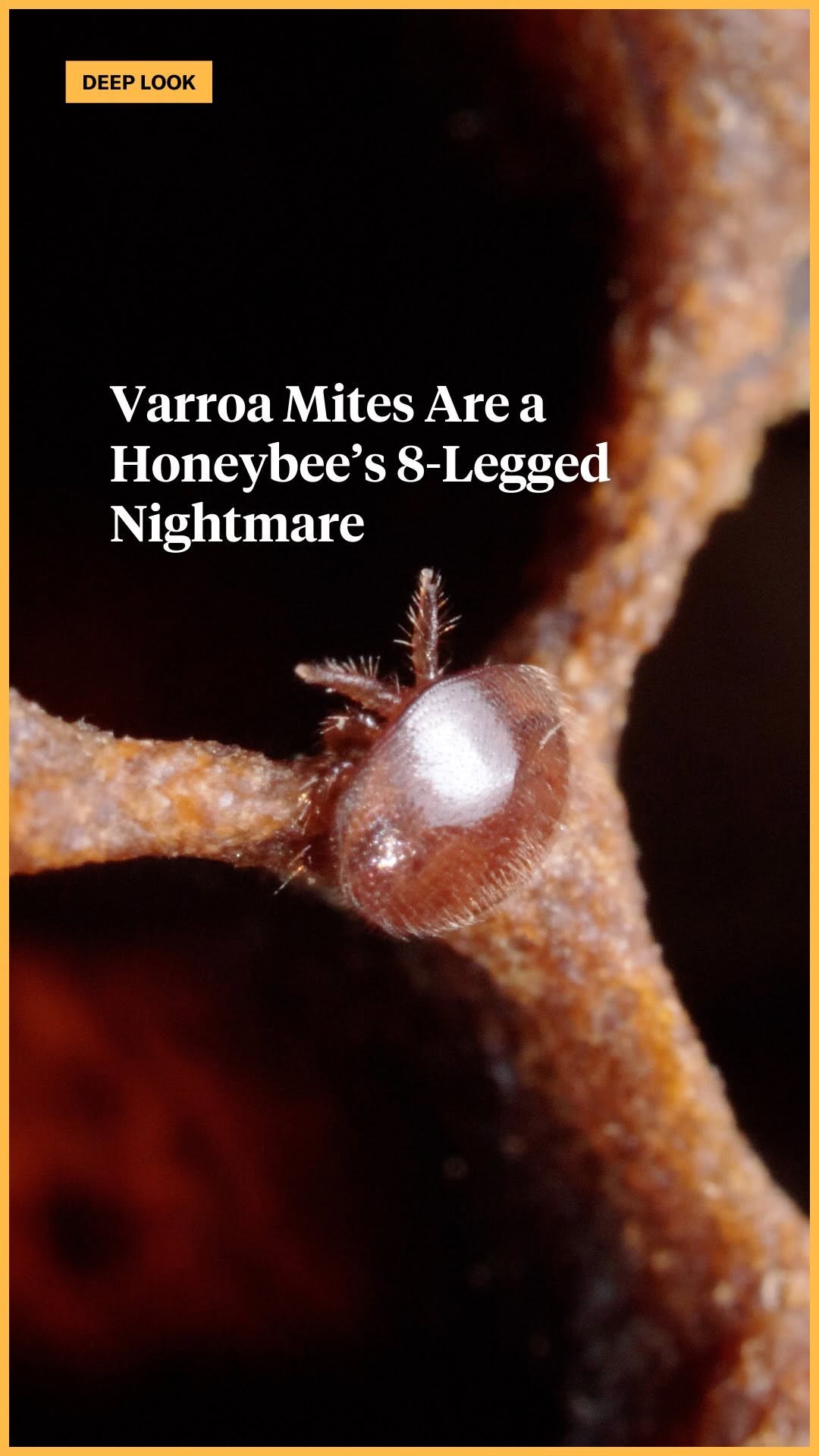
Deep Look uses a combination of macro photography and microscopy to capture subjects at scales far beyond what standard cameras can achieve. All footage is shot in 4K resolution, which preserves extraordinary detail when the image is magnified, making the bodies of tiny insects and biological structures look almost alien.
The mealybug destroyer is a predatory ladybug larva — Cryptolaemus montrouzieri — that hunts and eats mealybugs, the sap-sucking pests that can devastate grapevines. Deep Look highlighted it as a biological pest control solution for vineyards, capturing its feeding behavior through extreme close-up footage.
An acoel is a type of tiny marine flatworm that lives in symbiosis with photosynthetic algae inside its own body tissue. Because those algae convert sunlight into energy, the flatworm can essentially run on solar power — which is why Deep Look described it that way in a post about the species living on coral reefs.
Insects are a major recurring subject — the channel has covered ticks, hissing cockroaches, mealybugs, geckos, and snails — but Deep Look ranges much more widely across biology. Recent videos have explored why mammals evolved away from egg-laying, the birthing process of roly-polies, and solar-powered flatworms living on coral reefs.
Yes, Deep Look has an active Patreon page where viewers can directly support the series. The Patreon link is featured prominently in their YouTube channel bio alongside their TikTok, making community funding a visible part of how the show operates alongside its public media backing from KQED and PBS Digital Studios.
KQED, the organization that produces Deep Look, describes its science and environment coverage as award-winning. Deep Look's approach — using 4K macro photography to turn microscopic biology into visually stunning short-form video — has made it one of the most recognized science series in the PBS Digital Studios network.
Opera, the web browser company, partnered with Deep Look for sponsored content on YouTube in 2024. As a science education channel whose audience engagement runs well above the typical category average, Deep Look attracts brand partners looking to reach a curious, intellectually engaged viewership.
Deep Look has grown to well over 2 million subscribers on YouTube, placing it in the Macro creator tier. The channel's engagement rate consistently runs far above the science and education category median, which reflects an unusually devoted audience for a nature and microscopy series.
Stats (followers, engagement, audience demographics, growth) are pulled live from the CreatorDB API covering YouTube, Instagram and TikTok. Bio and FAQ content is AI-assisted; news items are sourced from cited public press at generation time. Read the full methodology →
If you'd like to update, correct, or remove this profile, get in touch and we'll handle it within 5 business days. We don't publish private data — every stat shown comes from your public platform profiles.
@kqeddeeplook · YouTube
+0 new followers
Preparing fresh data…
This usually takes 15–25 seconds.